
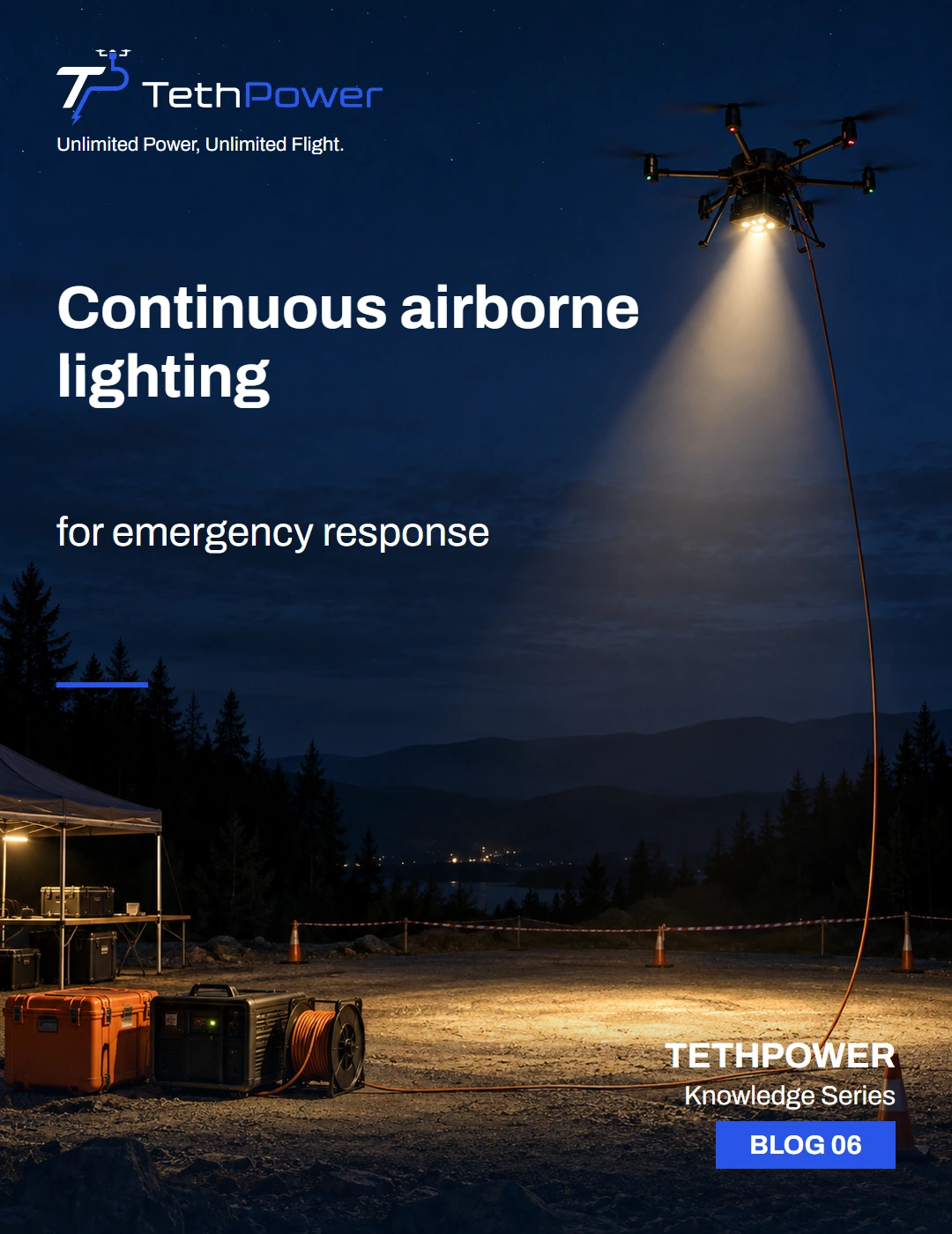
A tethered UAV lighting system can support extended airborne operation without repeated battery-change cycles. The result depends on the complete power chain and the operating procedure, not only on the lamp wattage.
This guide summarizes the information a buyer should prepare before requesting a configuration. Final flight, weather, and safety limits must always follow the equipment manuals and the rules that apply at the operating site.
Define the mission before selecting equipment
Start by describing the area to be illuminated, required operating height, mission duration, and space available for the ground station. A payload intended to spread light across a wide work area may need a different beam pattern from a payload used for inspection or focused support.
Record the aircraft model, available payload capacity, and the lighting unit's continuous power, voltage, mass, and connector. Also identify the required tether length and the type of ground input available at the site.
Size the complete power chain
The ground station, tether, and onboard module must be evaluated as one system. Compare the continuous demand of the aircraft and payload with the continuous output available, allowing practical margin for operating conditions and system losses. A peak-power figure alone does not describe a mission lasting several hours.
Confirm the ground input voltage, tether transmission voltage, onboard output, electrical connectors, and platform compatibility. Any missing interface value should be resolved before a model is selected.
Plan tether handling and the operating area
Choose a launch point with room for the power unit, tether management, and a controlled exclusion zone. Review nearby structures, vehicle or pedestrian traffic, overhead lines, and potential tether contact points. The payout, recovery, and storage procedure should be understood before flight.
Wind, precipitation, temperature, and visibility limits depend on the aircraft and the complete system. Continuous power does not extend those limits.
Prepare a contingency procedure
The operating plan should include preflight inspection, stop criteria, controlled descent, and independent ground lighting for setup and contingencies. Operators should know how to respond to a power interruption, aircraft warning, tether obstruction, or changing weather.
Keep a record of the configuration and the outcome of each operation. A documented setup is easier to repeat without relying on unverified assumptions.
Information to send us
- Exact aircraft model and version.
- Lighting payload mass, voltage, continuous power, and connector.
- Required height, tether length, duration, and mission conditions.
- Available ground input and destination or transport requirements.
Product support and enquiries
We manufacture tethered UAV power systems and support project-specific system integration and customization.
| Contact | Stella |
|---|---|
| Website | www.tethpower.com |
| stella@ | |
| WhatsApp / Tel | +86 177 1431 2943 |