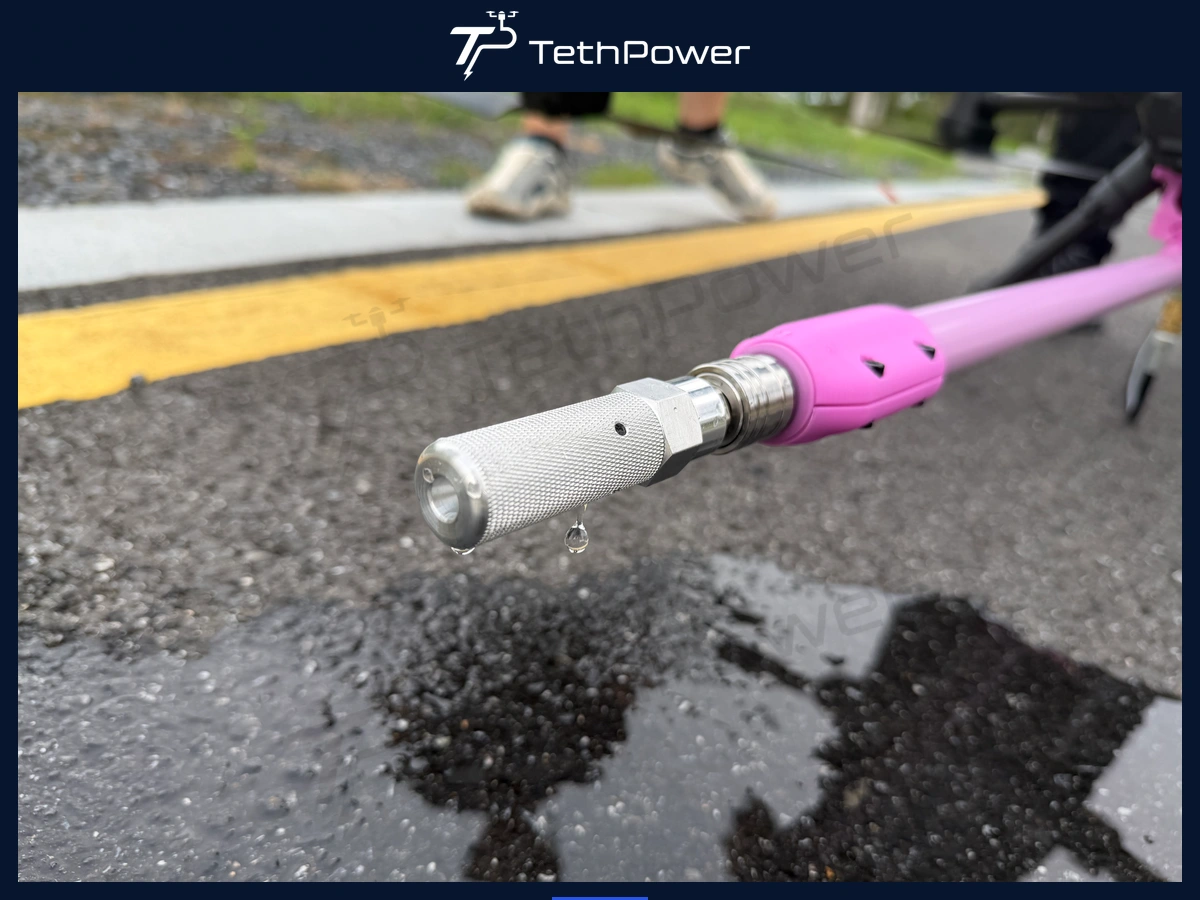
Quick answer: This is a 71 g, 80 mm forged-aluminum drone cleaning nozzle that applies foam and then rinses with clean water using the same head. Switching modes only means shutting off the foam air line — no disassembly and no landing mid-job. It has been field-tested on a commercial glass curtain wall.
The Real Cost of a Mid-Job Nozzle Swap
On a facade job, foam pre-treatment does the heavy lifting: it loosens dust, mineral scale and light adhesive residue before the rinse pass gets a clean result. The problem is what it takes to get foam and water out of the same aircraft. A single-mode nozzle forces a choice — spray water only and accept weaker results on stubborn sections, or land the drone mid-job, swap to a different head, and relaunch.
Every one of those swaps adds ground time, battery cycles and handling risk to a job that is already billed by the hour. Our dual-mode nozzle removes the trade-off: foam and water share one 71 g head, and the operator switches between them without ever bringing the aircraft down.
At a Glance: Field-Measured Specifications
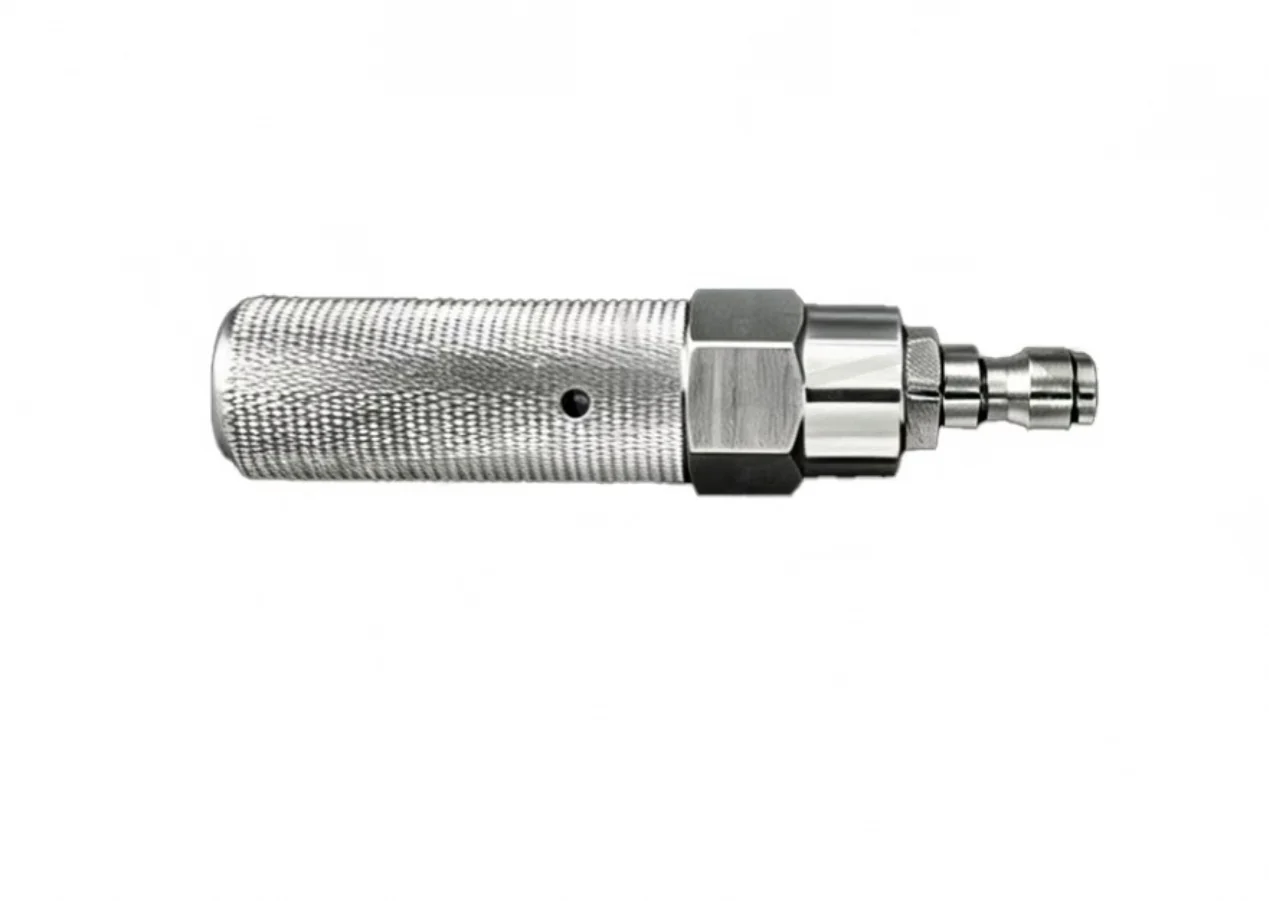
The 71 g forged-aluminum dual-mode nozzle body.
Scroll horizontally to read the full table
Inside the Dual-Mode Switch
The nozzle's foam circuit draws cleaning agent and compressed air through a vortex-style internal mixing structure, which breaks the mixture into dense, fine foam rather than a thin spray. That density is what lets foam cling to a vertical glass surface instead of sliding off before it can work.
To rinse, the operator simply shuts off the foam air supply. Clean water continues through the same body and exits the same outlet — there is no valve to remove, no second nozzle to carry, and no reconfiguration between the pre-treatment pass and the rinse pass.
Foam Mode vs. Clean-Water Mode
Scroll horizontally to read the full table
What the Field Test Confirmed
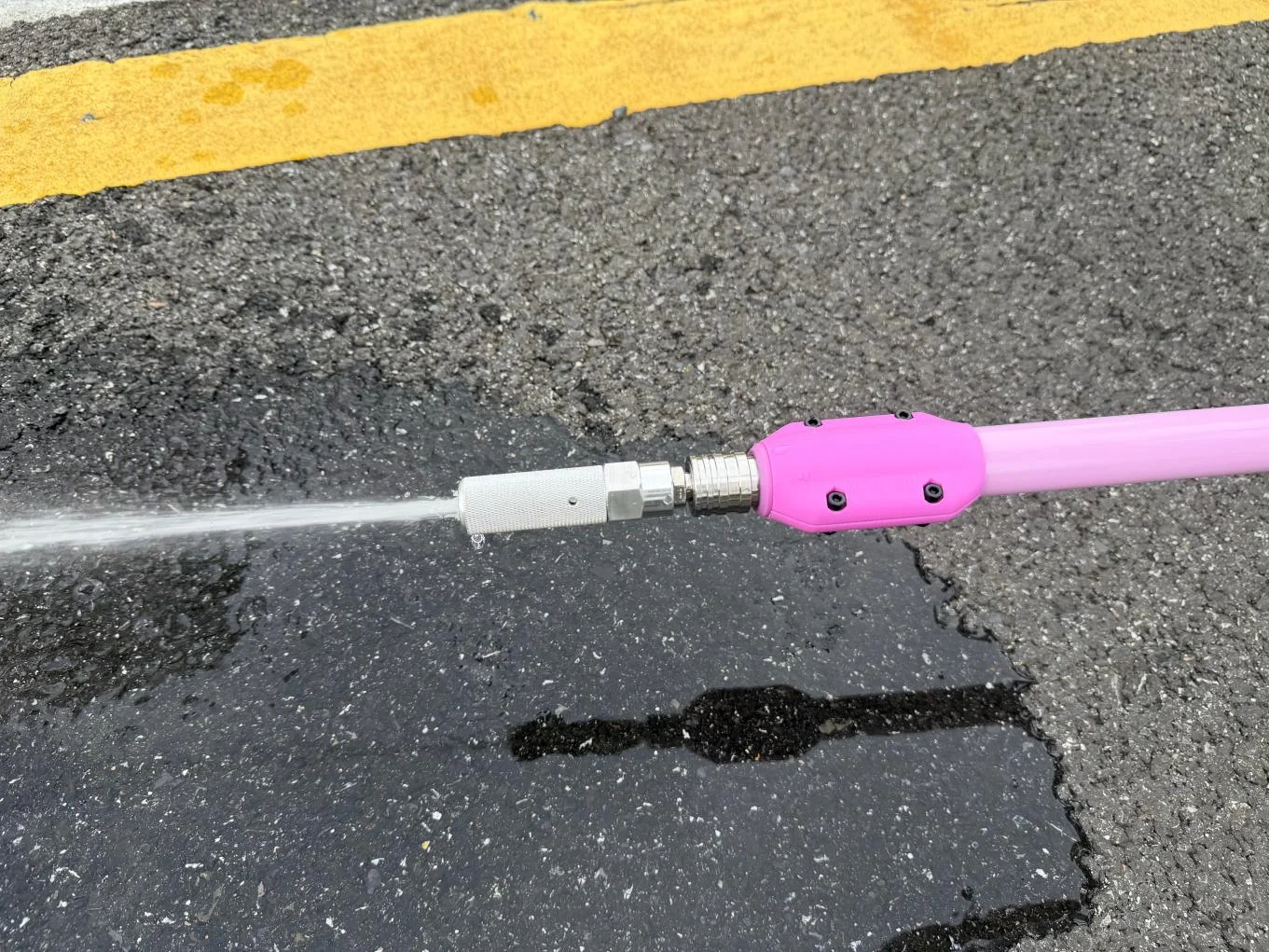
Clean-water mode test of the lightweight airborne cleaning nozzle.
Foam generated through the vortex structure was dense enough to stay on a vertical glass surface rather than running off immediately.
Working distance and wind tolerance were sufficient for close-range facade passes under the tested conditions.
Foam held enough surface contact time to soften dust and light residue ahead of the rinse pass.
Mode switching required no tool changes and no descent between the foam and rinse passes.
Using foam as a pre-treatment step reduced the number of high-pressure rinse passes needed per section compared to a water-only approach; the actual reduction depends on contamination type, chemistry and operating technique.
Recommended Operating Sequence
Confirm the thread interface, pump pressure/flow range and cleaning-agent compatibility before mounting the nozzle.
Install the nozzle on the cleaning lance and pressure-test all hose connections on the ground.
Fly to the target section and apply foam, allowing dwell time appropriate to the cleaning agent in use.
Close the foam air supply to switch to clean-water mode — no landing required.
Rinse the treated section, then inspect and repeat only on areas that still show residue.
Where Operators Are Using It
Scroll horizontally to read the full table
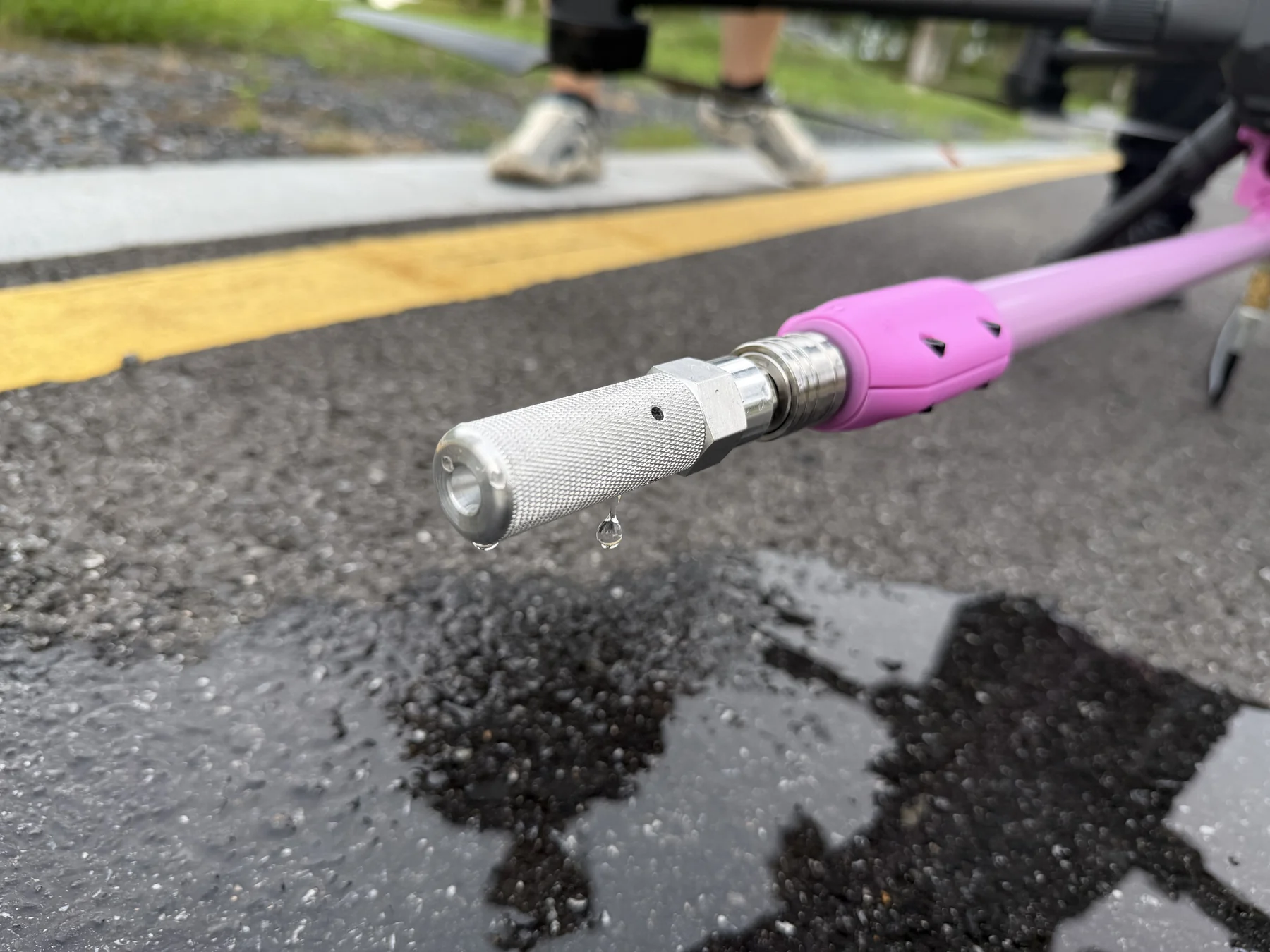
Dual-mode cleaning nozzle installed for field testing.
Before You Order: Integration Checklist
Scroll horizontally to read the full table
Frequently Asked Questions
Do I need to land the drone to switch between foam and water?
No. Mode switching is done by closing the foam air supply — the aircraft stays airborne and no head change is required.
What does the nozzle weigh, and what is it made of?
71 g, field-measured. The body is forged aluminum, chosen to keep the airborne accessory light while staying structurally rigid.
What surface has it actually been tested on?
A commercial glass curtain wall. It is applicable to other facade and panel surfaces, but pressure and chemistry compatibility should be confirmed for each material before use.
Will it fit the cleaning drone I already own?
In most cases, yes — the nozzle uses a standard threaded interface. Exact thread spec, pump output and payload margin should still be confirmed against your platform before ordering.
What cleaning agents can I use with it?
Standard foam-generating detergents are compatible; viscosity and dilution ratio affect foam density and dwell time, so confirm your specific agent with us before your first job.
Can it be retrofitted onto a cleaning lance I already use?
Usually yes, provided the thread interface matches and your pump can support foam-air mixing. Confirm the exact thread spec with us before ordering to avoid a mismatch on delivery.
Talk to us about your configuration
Share your drone model, lance interface, pump pressure/flow, hose spec, target surface and cleaning agent, and we will confirm whether this nozzle architecture fits before you change your airborne plumbing.
| Contact | Stella |
|---|---|
| Website | www.tethpower.com |
| stella@ | |
| WhatsApp / Tel | +86 177 1431 2943 |