
Application: broadcasting and integrated media production, emergency alerts, aerial content capture and wide-area inspection
Quick Answer
Direct answer Two DJI Matrice 400 aircraft can extend aerial broadcasting and media coverage through planned A/B rotation. While Aircraft A broadcasts, records imagery or patrols, Aircraft B remains prepared with the same approved audio and mission plan. B launches before A reaches its return threshold, reducing handover gaps while A lands for battery and equipment turnaround. This is an all-day mission-coverage concept, not unlimited or uninterrupted flight: actual continuity depends on verified endurance, charging and cooling capacity, weather, airspace approval, crew readiness, communication links and disciplined handovers.
This broadcasting configuration is designed for policy announcements, emergency warnings, media capture and patrol records across areas that are difficult to reach from the ground. It uses two DJI Matrice 400 aircraft and two compatible high-power loudspeaker payloads so one flight chain can prepare to take over while the other returns for battery and equipment turnaround.
Project at a Glance
Scroll horizontally to read the full table
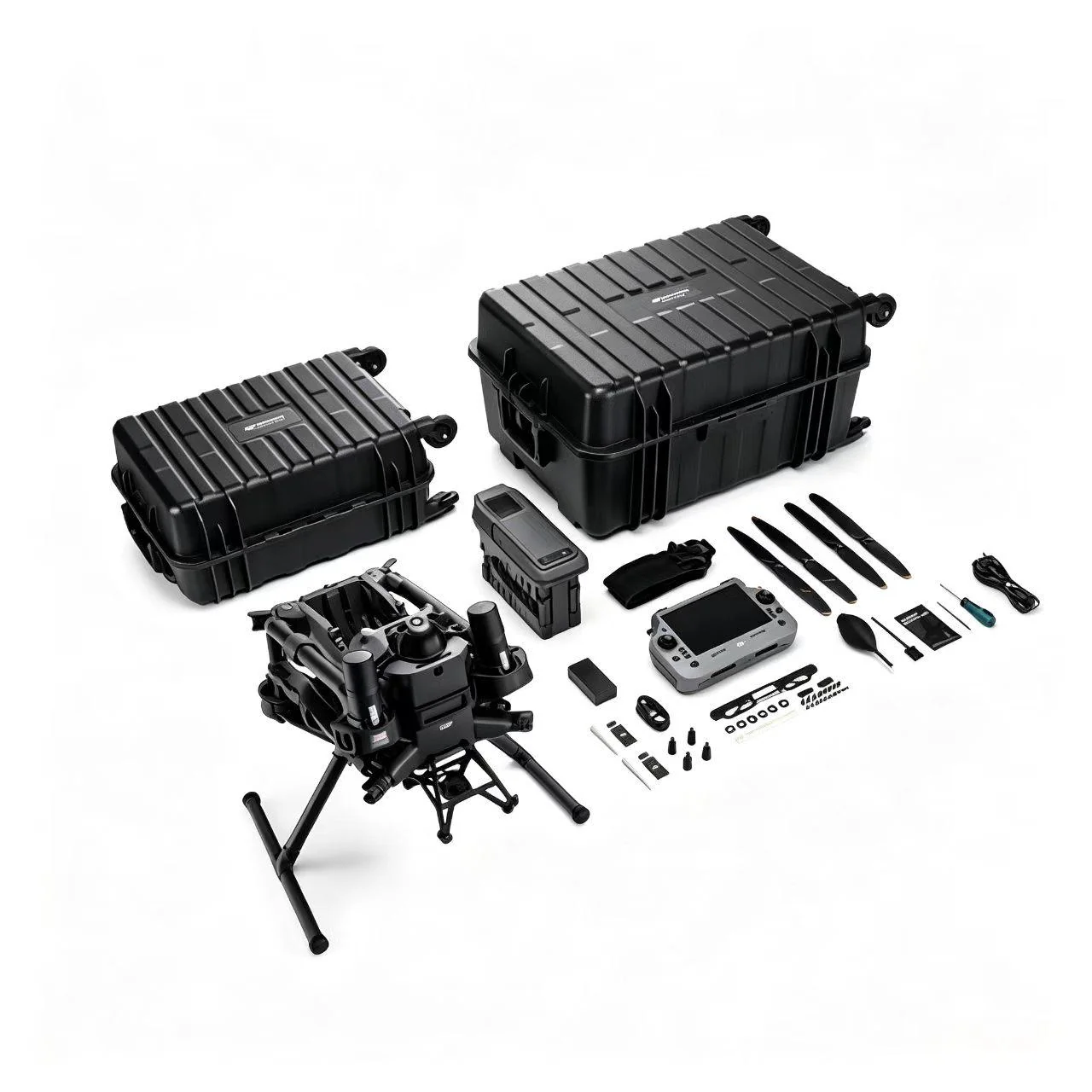
Figure 1. Representative DJI Matrice 400 field kit used as the platform basis for the dual-aircraft operating concept.
The Operational Problem
A single battery-powered aircraft can be highly mobile, but every sortie eventually ends for landing, battery replacement and inspection. For a broadcaster or media organization, that creates four practical gaps:
Fixed loudspeakers and ground vehicles cannot reach every mountain village, river corridor, forest edge, industrial zone or event area.
A late arrival in an emergency can reduce the value of evacuation instructions, hazard warnings and route guidance.
Single-aircraft battery changes interrupt a live broadcast, patrol record or continuous sequence of aerial footage.
One aircraft and one payload create a single point of failure during major events or time-critical public communication.
Solution Architecture
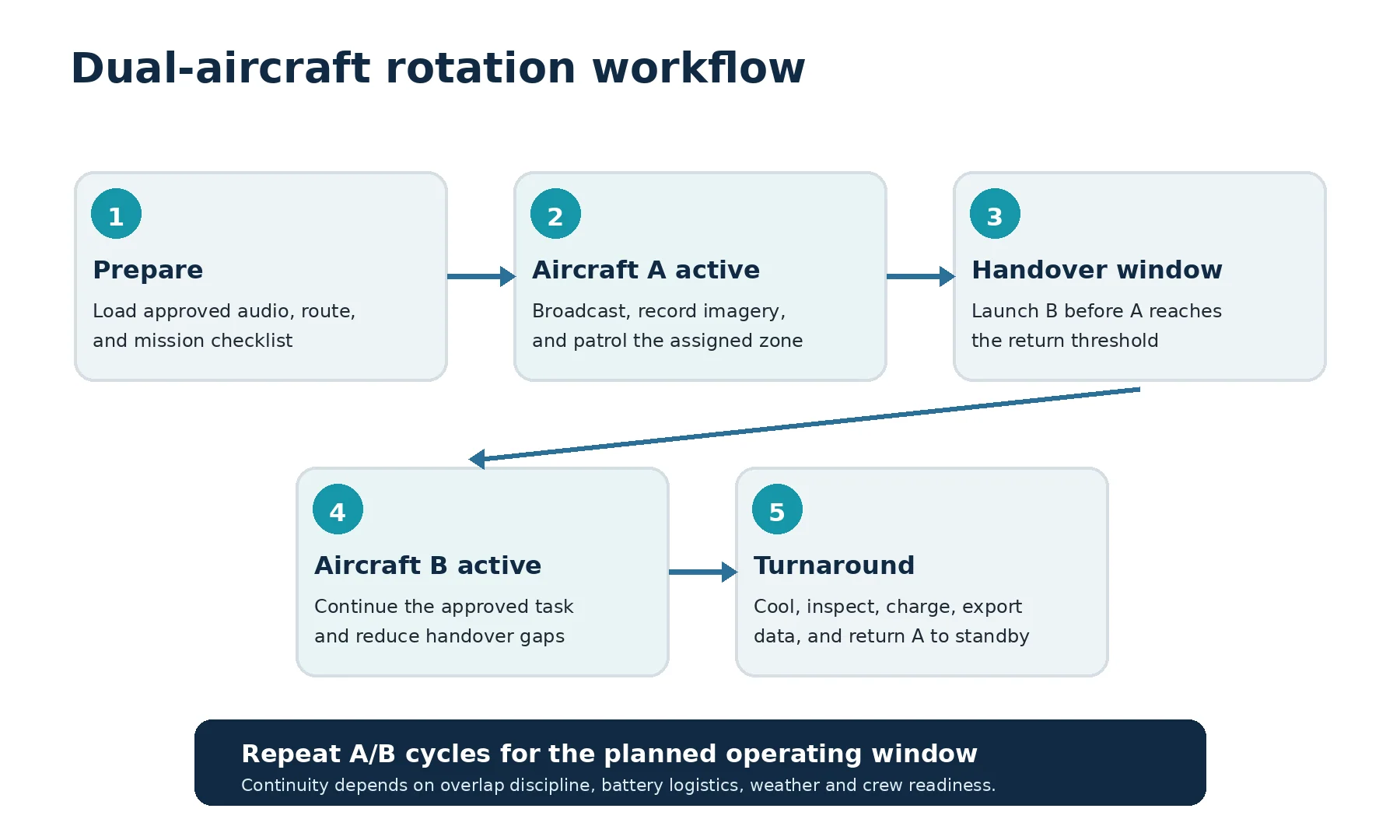
Figure 2. The A/B rotation creates mission continuity through planned overlap and parallel ground turnaround.
The reference architecture uses two independent flight chains. Each aircraft can carry the assigned audio payload and execute the approved mission profile. The ground team prepares Aircraft B before Aircraft A lands, loading the same approved audio or mission plan and completing the required checks in advance.
Reference Project Architecture
Scroll horizontally to read the full table
Aircraft supply The DJI Matrice 400 aircraft formed part of the reference project architecture. Whole-aircraft availability is not assumed for international projects. UAV procurement, destination eligibility, export compliance and our final supply scope must be confirmed separately. DJI manufactures the aircraft.
Reference Platform Data for Engineering Review
Important The values below are manufacturer reference data, not project acceptance results. Actual endurance and payload margin change with the installed camera, loudspeaker, temperature, altitude, wind, flight profile, battery condition and firmware.
Scroll horizontally to read the full table
Primary references: DJI Matrice 400 specifications
Standard A/B Rotation Procedure
Prepare approved audio files, live-broadcast permissions, flight routes, return thresholds and alternate landing areas.
Launch Aircraft A for the first broadcast, aerial-imaging or patrol segment while Aircraft B remains fully configured on standby.
Before A reaches its operating reserve threshold, start B, confirm payload and communication functions, and launch it into the handover zone.
Transfer the active task to B only after the crew confirms stable flight, correct audio and the required camera or patrol view.
Land A, isolate the battery, allow the required cooling period, inspect the aircraft and payload, export mission data and prepare the next sortie.
Repeat the cycle with one clear mission commander controlling the handover decision and airspace separation.
Planning Framework: What Must Be Measured?
The operating plan requires measured flight duration, handover overlap, battery cooling time and recharge-to-ready time. Determine the sortie count and battery quantity after testing the final loudspeaker, camera, route, reserve threshold and site conditions.
Scroll horizontally to read the full table
Battery planning The final battery and charger quantities depend on measured sortie duration, recharge-to-ready time, battery cooling requirements, simultaneous charger capacity and the required contingency reserve.
Why the Two-Aircraft Method Works
1. It moves downtime away from the active mission
Battery replacement, cooling, visual inspection and data export happen on the ground while the other aircraft is already airborne. The aircraft are not expected to fly indefinitely; the mission remains continuous because ground servicing and flight occur in parallel.
2. It adds operational redundancy
Two independent aircraft and two audio payloads reduce dependence on a single flight chain. If one system is unavailable because of a fault, battery issue or maintenance check, the second can cover the immediate mission while the commander reassesses whether operations may safely continue.
3. It preserves mobility
Unlike a fixed public-address point, the aircraft can move between villages, river sections, forest edges, industrial zones and event routes. This makes the architecture suitable when the mission area itself changes during the day.
4. It supports three broadcasting modes
This configuration supports three broadcasting functions. Their availability depends on the verified loudspeaker model, control interface and approved operating procedure:
Scroll horizontally to read the full table
5. It combines media production with field operations
The same operating window can support aerial scene documentation, patrol records, tourism footage and recurring short-form media content. This can reduce repeated field deployments, but actual savings and production efficiency must be measured by the broadcaster rather than assumed from the equipment list.
Application Scenarios

Figure 3. Representative use environments from the project brief: public safety, forestry and water infrastructure.
Scroll horizontally to read the full table
Operational Limits and Safety Boundaries
Plan long-duration operations within the following limits:
Scroll horizontally to read the full table
Dual-Drone Rotation or Tethered Power?
The two approaches solve different long-duration problems. A dual-aircraft battery rotation is usually better when the aircraft must move over a wide area. A tethered system is usually better when the mission needs persistent coverage above one controlled ground position and the aircraft platform supports safe power and tether integration.
Scroll horizontally to read the full table
Related reading: Tethered Drone vs. Battery Drone for Long-Duration Missions
Pre-Deployment Acceptance Checklist
Measure actual airborne mission time with the final camera, loudspeaker, mount and required reserve threshold.
Log battery temperature, landing state of charge, cooling time and recharge-to-ready time.
Confirm both aircraft use synchronized mission files, approved audio and compatible firmware.
Test message intelligibility at representative distances, terrain, wind and background-noise conditions.
Define the handover zone, alternate landing area, lost-link action and abort authority.
Verify charger capacity, generator or grid supply, battery fire-safety arrangements and spare availability.
Confirm local operating approval, crew qualifications, crowd restrictions, privacy controls and emergency coordination.
Frequently Asked Questions
Can two DJI Matrice 400 aircraft support all-day aerial broadcasting?
They can support an all-day mission-coverage plan through repeated A/B rotation, provided verified endurance, battery and charger capacity, cooling time, crew readiness, weather and airspace conditions can sustain the required launch interval. This is not a promise of uninterrupted operation under every condition.
How many batteries are required for dual-aircraft rotation?
The required quantity depends on measurements from your project. Calculate the full battery cycle time - measured flight slot plus cooling plus recharge-to-ready time - against the verified launch interval, then add contingency capacity and confirm charger-channel constraints.
Does IP55 make the M400 an all-weather drone?
No. IP55 is an ingress-protection rating, not permission to fly in every weather condition. Wind, precipitation, icing, lightning, visibility, temperature and local operating rules still govern the decision.
Which loudspeaker model was used in this project?
This configuration uses two M400-compatible high-power loudspeakers; the exact brand and model require confirmation. Do not apply model-specific weight, sound-pressure or distance figures until the final payload is confirmed.
When should a tethered system be considered instead?
Consider tethered power when the aircraft can remain above one controlled ground position and the mission values persistent endurance more than route mobility. We can review aircraft power, payload, tether length and site input requirements.
Request a Project-Scope Assessment
For an initial assessment, send the target broadcasting or media mission, locally available aircraft model, required payload functions, planned operating window, site temperature and altitude, local operating area and destination. Whole-aircraft availability is not assumed. We will confirm the applicable supply and integration boundary, destination eligibility, export-compliance requirements and the items that require field testing before quotation or deployment.
| Contact | Stella |
|---|---|
| Website | www.tethpower.com |
| stella@ | |
| WhatsApp / Tel | +86 177 1431 2943 |