The mistake to avoid: Do not select a tethered system by kW rating alone. Power, voltage, tether length, cable mass, payload margin, environment and data requirements interact with each other.
A request such as “I need a 5 kW tethered power system” sounds specific, but it is not enough information to engineer a reliable configuration. The same nominal power can behave very differently at different aircraft voltages, tether lengths and operating altitudes.
We use a small set of practical inputs to narrow the architecture before discussing detailed customization. These seven parameters answer most of the questions that determine whether a proposed tethered system is realistic.
1. Aircraft Battery Voltage
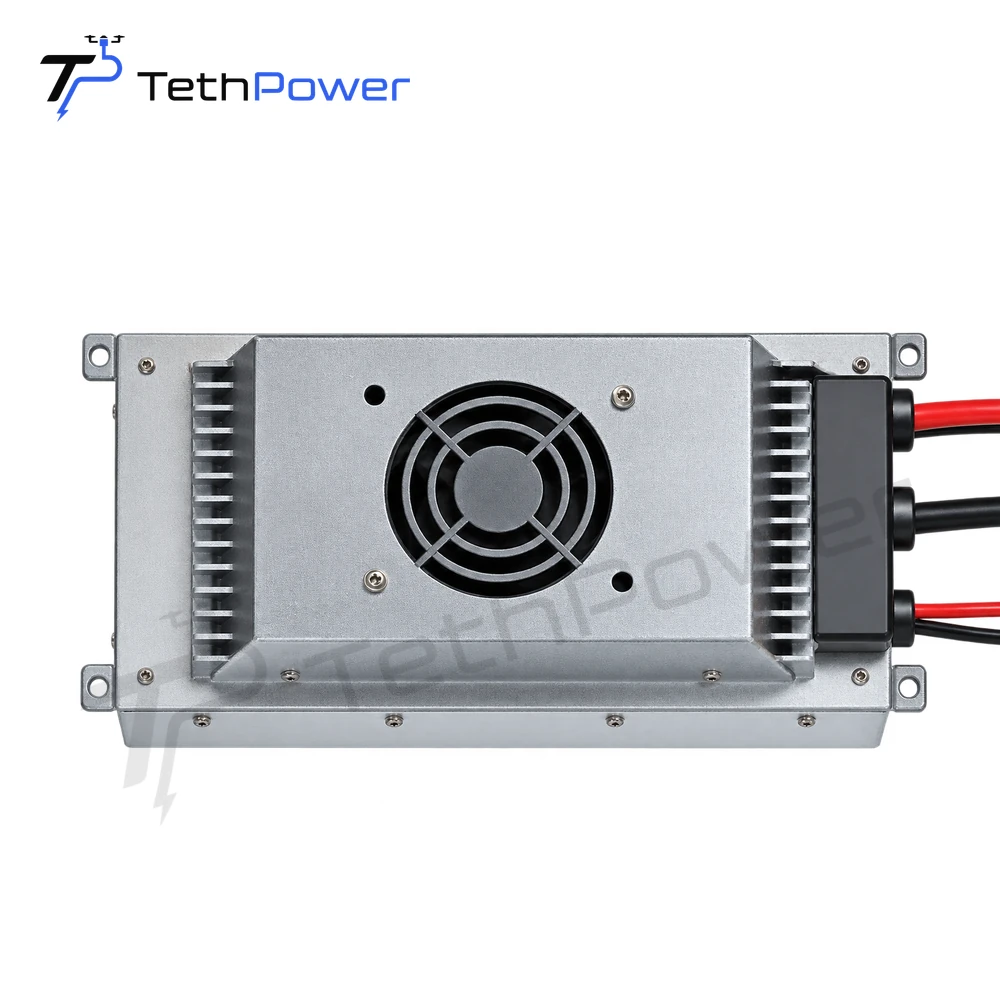
Start with the UAV electrical architecture. The airborne DC/DC module must provide an output voltage compatible with the aircraft power bus or battery-equivalent voltage. Depending on the platform, this may be expressed as 6S, 12S, 14S, 18S, 24S or a custom DC bus.
Power rating cannot compensate for a voltage mismatch. A module capable of several kilowatts is still unusable if its output does not match the aircraft input requirements.
To review available conversion stages, browse the onboard DC/DC power modules. Compare each module's specified input range and regulated output with your aircraft requirements; a shared power class does not establish compatibility.
2. Continuous Power Consumption
The next question is how much power the aircraft really consumes during the intended mission. This should be based on actual hover or working data whenever possible, not simply the maximum rating printed on a motor or ESC.
Stable hover power in the intended aircraft configuration.
Normal mission power with the payload operating.
Any known increase caused by hose drag, lighting payloads, antennas or other external equipment.
3. Peak Power
UAV power demand is dynamic. Takeoff, acceleration, gust compensation and rapid attitude correction can create short peaks above normal operating power. A tethered system that is sized only to average hover consumption may lack enough transient headroom.
We therefore separate continuous rated power from short-duration peak power during preliminary selection. This distinction is especially important for heavy-lift aircraft and high-power payloads.
4. MTOW and Actual Mission Payload
Maximum takeoff weight tells only part of the story. Engineers also need to know what the aircraft will actually carry during the mission. The tethered conversion adds airborne hardware and the aircraft supports part of the tether load as it climbs.
Useful questions include: How much payload margin remains after the camera, cleaning tool, light, antenna or other mission equipment is installed? What airborne module weight can the aircraft accept? How much cable load is tolerable at the required height?
5. Required Tether Length and Operating Height
Longer tether changes both electrical and mechanical behavior. Resistance and voltage drop increase with cable length. Cable weight and wind loading also increase. This is why adding another 100 meters of cable is not merely a packaging decision.
Basic electrical relationship: For a given power level, P = V x I. Cable heating and resistive loss scale approximately with I²R. Higher transmission voltage can therefore reduce current and cable loss, but it also increases insulation, connector and safety requirements. The system has to be optimized as a whole.
In practical design, the goal is to transmit enough power while keeping the tether light enough for the available payload margin. That tradeoff is central to tethered UAV engineering.
6. Operating Altitude, Temperature and Environment
A system tested at sea level in a mild indoor environment cannot automatically be assumed to deliver the same thermal margin at high altitude or in a hot outdoor site. Air density, ambient temperature, wind, solar loading and enclosure cooling can affect both the UAV and the power electronics.
For demanding projects, we ask for the expected site altitude and temperature range early because derating may influence the recommended module, cooling approach or power margin.
7. Does the Mission Need Fiber Optics?
Power and data should be treated as separate design requirements. Some missions only need electrical power and can continue using the UAV radio link. Others require a wired path for HD video, Ethernet, serial data, SBUS or other payload communication.
When RF interference, bandwidth or link stability is a concern, a power-and-fiber composite tether can integrate optical fiber into the cable. This decision affects cable construction, reel design, slip rings and airborne/ground interfaces, so it is best defined at the beginning of the project.
A Practical 7-Point Selection Checklist
Scroll horizontally to read the full table
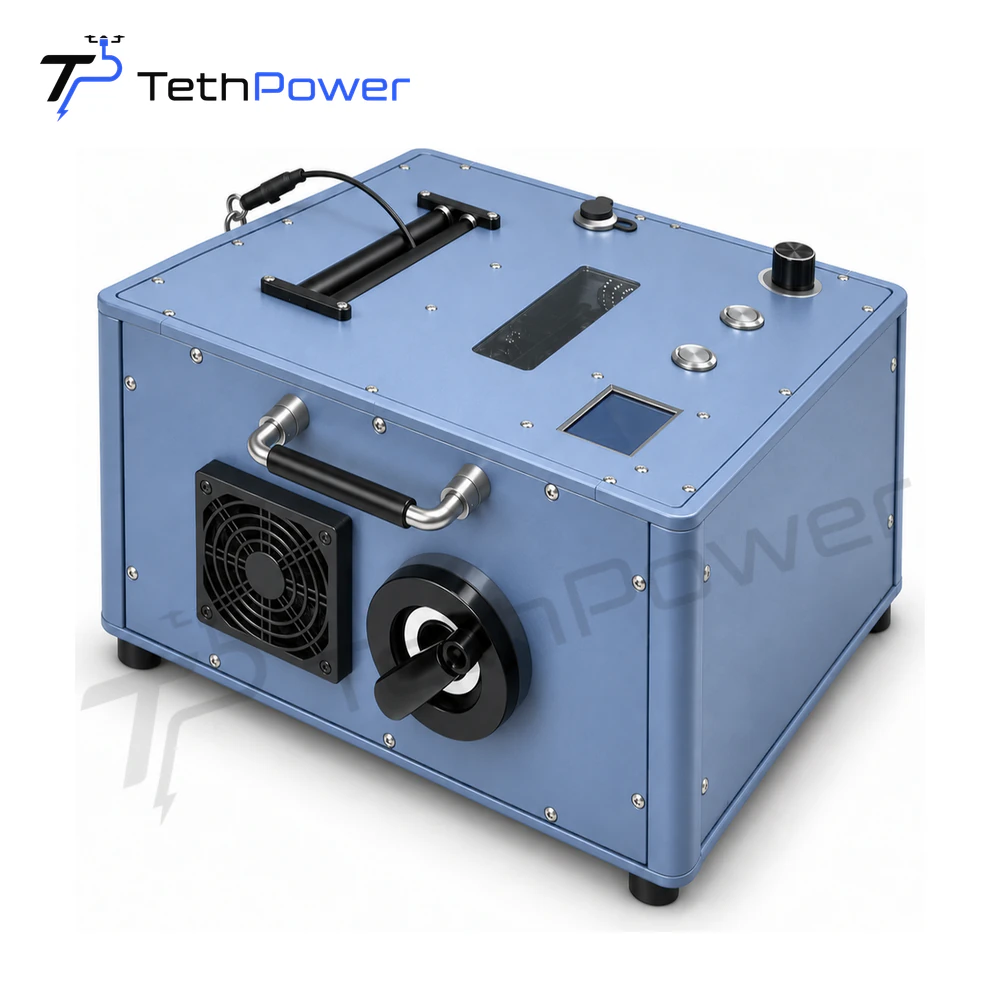
With these inputs defined, review the ground power stations and product manuals. Ground and airborne ratings describe different stages of the power chain and should be checked together for the proposed configuration.
Why “More Power” Is Not Automatically Better
Oversizing can increase cost, weight and system complexity without solving the actual design constraint. Undersizing can create voltage sag, thermal stress or insufficient transient margin. The best configuration is the one that fits the mission with appropriate engineering headroom.
This is also why we do not recommend a product solely from a customer’s requested kW number. If the key inputs are missing, we ask for them first. That may make the first conversation slightly more technical, but it reduces expensive mistakes later.
Information to send us for a preliminary recommendation
Aircraft model and battery voltage.
Real-time or continuous power consumption.
Peak power demand, if known.
MTOW and actual working payload.
Required operating height or tether length.
Operating altitude and expected temperature range.
Whether optical fiber or a wired data interface is required.
FAQ
Can I choose a system only by drone weight?
No. Aircraft weight matters, but voltage, real power demand, peak power, tether length and payload margin are equally important.
Why does tether length affect power system size?
Longer cable increases resistance, voltage drop and airborne cable mass. The full transmission chain may need to be recalculated.
Is a thicker cable always better?
Not necessarily. A thicker conductor reduces electrical resistance but adds weight. Tethered design balances electrical loss against airborne mass.
Should I add fiber even if I do not need it now?
Only when future data requirements justify the added cable and reel complexity. The better approach is to define current and foreseeable interfaces before finalizing the tether.
Talk to us
For a faster preliminary recommendation, send your aircraft model, battery voltage, continuous and peak power, required operating height or tether length, and destination country.
| Contact | Stella |
|---|---|
| Website | www.tethpower.com |
| stella@ | |
| WhatsApp / Tel | +86 177 1431 2943 |
TethPower | Tethered UAV Power Systems and Mission Equipment