The decision
Treat the aircraft and communications payload as separate loads before combining them into one power requirement. Select the ground station, tether and airborne supply around that complete installation.
Define the elevated equipment and its job
A communications project may need to hold a radio, repeater, antenna or other networking equipment above a fixed location. For power selection, the useful starting information is the actual payload: its mass, input voltage, electrical load, mounting arrangement and ground connections.
Describe the intended operating height, duration and deployment area. These inputs define the equipment to support. Coverage and network performance require their own review of the radio system, terrain and installation.
Separate aircraft power from payload power
The aircraft’s propulsion load and the communications equipment may use different voltages or power connections. Record them separately even if both ultimately receive energy from the same ground source.
| Load or interface | Information for the power review |
|---|---|
| Aircraft | Allowed DC input range and measured sustained/peak demand |
| Communications payload | Input range, sustained demand and any startup or transmit peaks |
| Auxiliary electronics | Converters, control equipment and cooling loads |
| Airborne installation | Total mass, mounting space, airflow and cable routing |
| Ground equipment | AC source, station, network equipment and shared loads |
This makes it possible to distinguish the main airborne supply from any additional payload supply. A communications connector is not automatically a power connection, and a matching voltage does not establish a suitable network interface.
Choose how data returns to the ground
The electrical tether supplies power. The data link can be a separate arrangement or part of a power-and-fiber tether, depending on the system. Identify the network interfaces at the payload and on the ground, along with any conversion equipment.
The power and fiber integration guide covers the information needed to discuss that option. Include the existing equipment that should remain in use.
Match the station, cable and airborne module
Longer or heavier tether arrangements affect both the electrical and airborne requirements. Review the arriving voltage at load, suspended cable mass, module cooling and the aircraft’s available carrying capacity. Keep the selected cable and operating height in the same proposal as the modules.
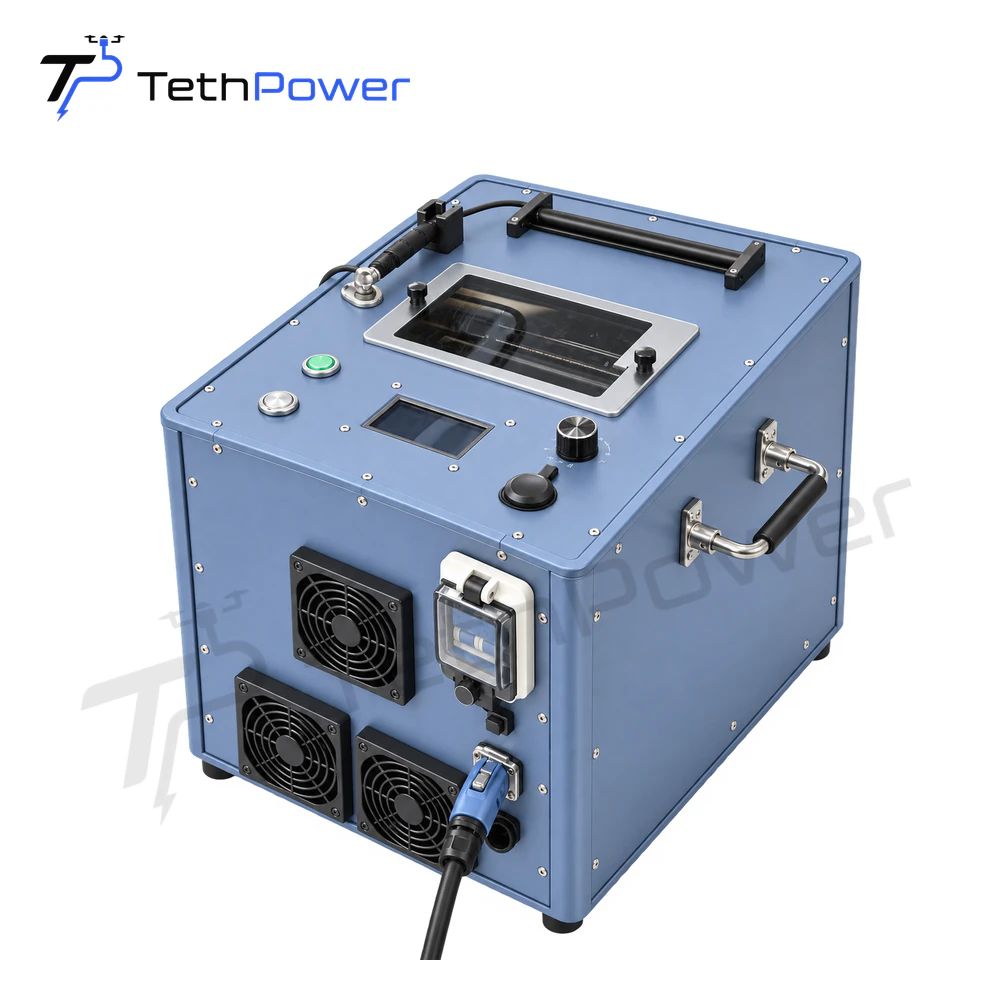
At the site, a generator or mobile power station may provide the ground station’s required AC input. Include its model, continuous output and other shared equipment. See ground AC supply selection for that part of the brief.
Discuss a complete power scope
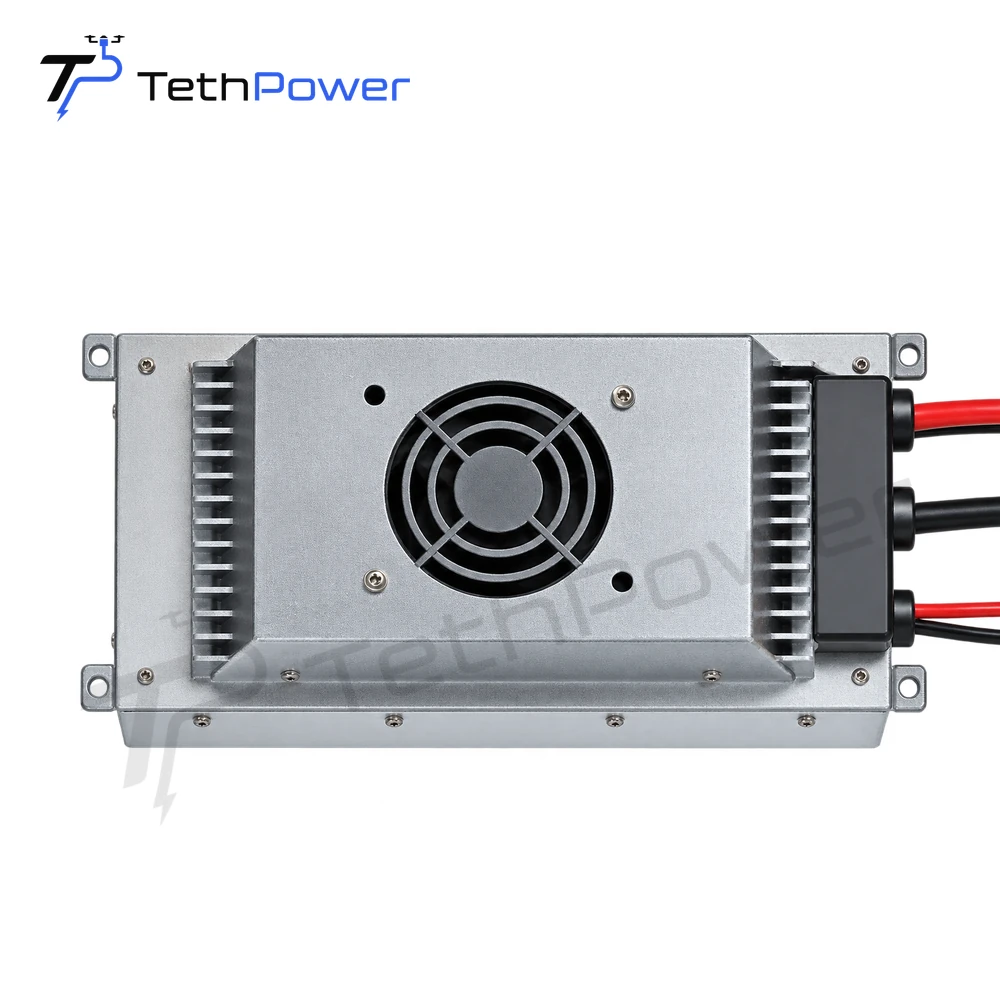
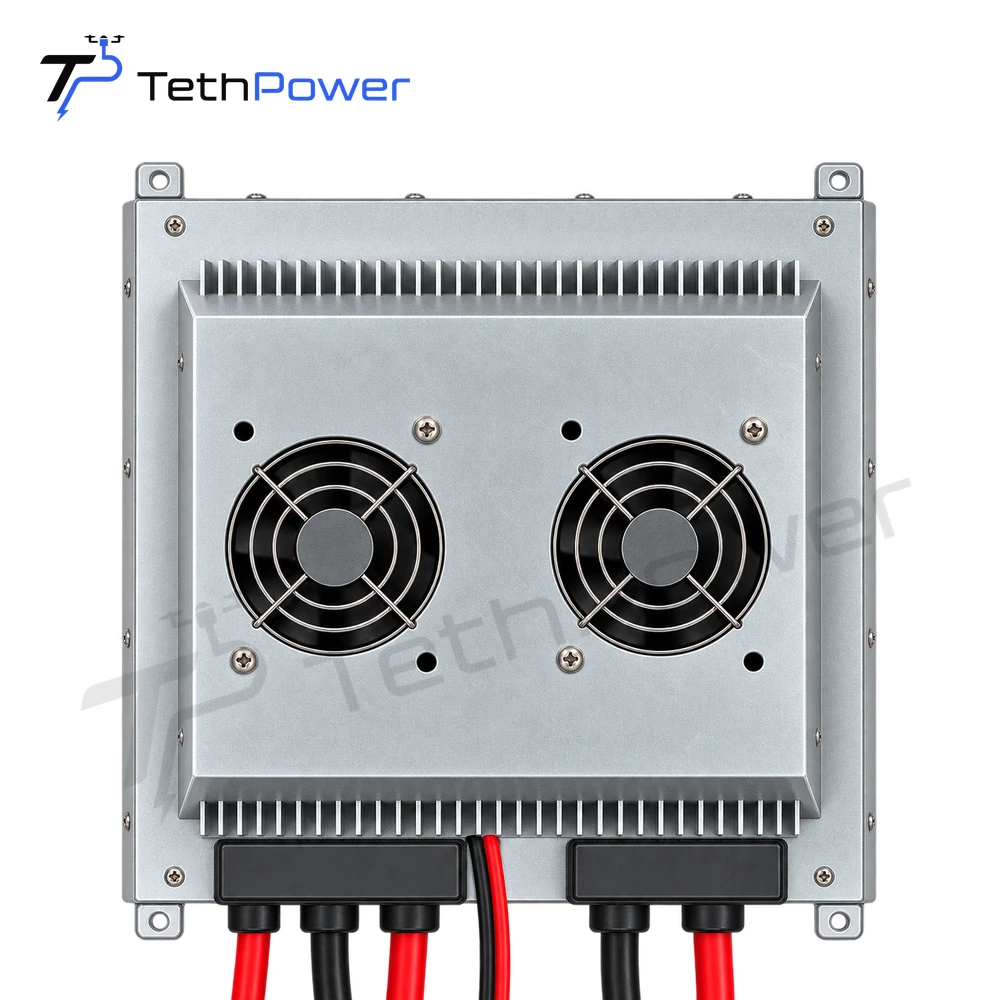
We can review the ground and airborne modules around your communications payload, including requests for cable, connector or mounting changes. Use Build for listed components or integration support for a project with existing aircraft and network equipment.
Start with the aircraft model, payload specification and intended operating height. We can use those details to identify the power interfaces that need to be resolved.