The decision
An existing drone may be a starting point for tethered operation when its electrical supply, payload allowance and installation can support the conversion. Begin with the exact aircraft and task.
Decide what you want the conversion to achieve
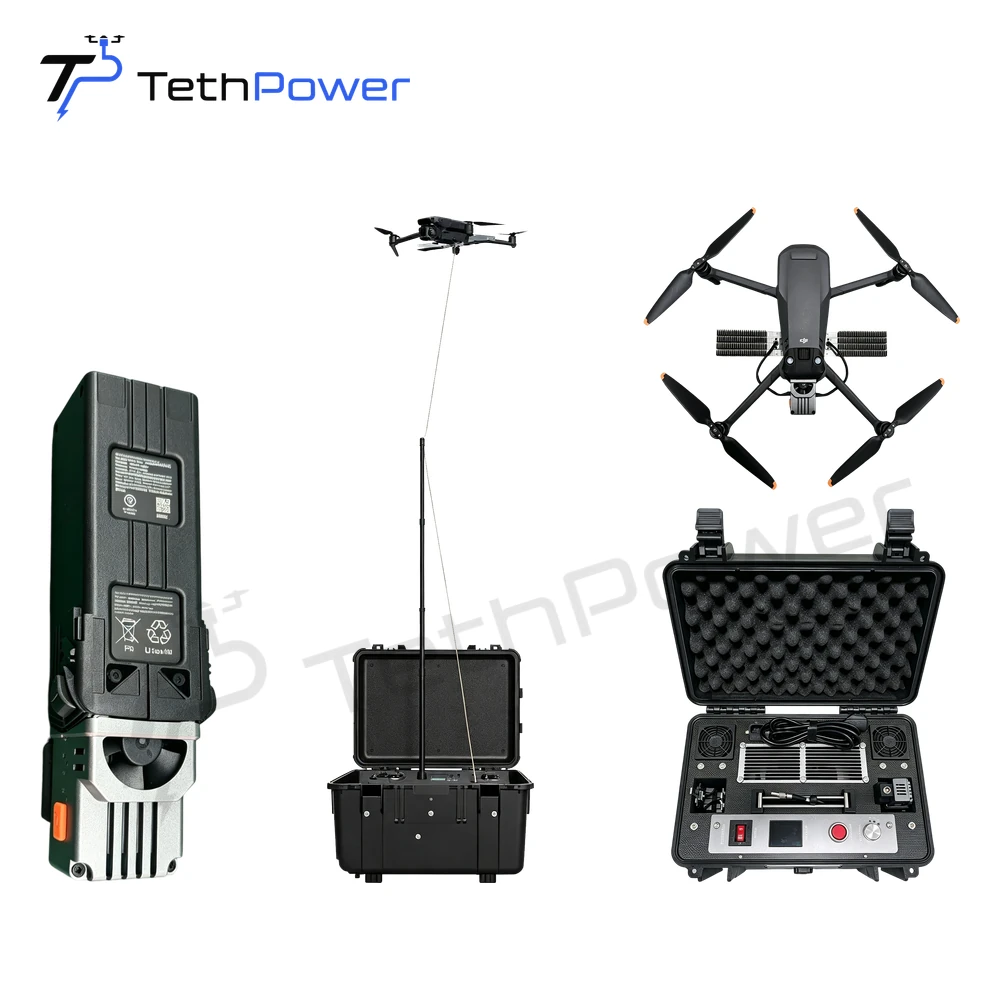
A tethered conversion is most relevant when your aircraft needs to work within a defined area for longer periods: holding a light, supporting a communications payload or working at a fixed cleaning location. The tether adds a connection to the ground and equipment for managing that connection.
For a job that requires repeated travel between distant locations, first compare the operating pattern with battery flight. Our tethered versus battery-powered drone guide explains that tradeoff.
Identify what you already own
Keep the aircraft, installed payload and battery arrangement together in the initial review. A familiar model name is helpful, but the actual equipment version and installation matter too.
| Existing equipment | Information to send | What it helps us review |
|---|---|---|
| Aircraft | Exact model, input range and available technical documents | Airborne output and integration approach |
| Mission payload | Weight, mounting and electrical demand | Total airborne load and any separate supply |
| Battery installation | Battery type and how it connects to the aircraft | Power sharing, backup and aircraft response |
| Ground supply | Mains details or generator/mobile power station model | Ground station input |
| Work site | Required height, cable route and operating conditions | Tether, reel and deployment requirements |
You can begin with the model and task if the electrical measurements are not yet available. We will identify the information needed for the next selection step.
Choose a named system or a component project
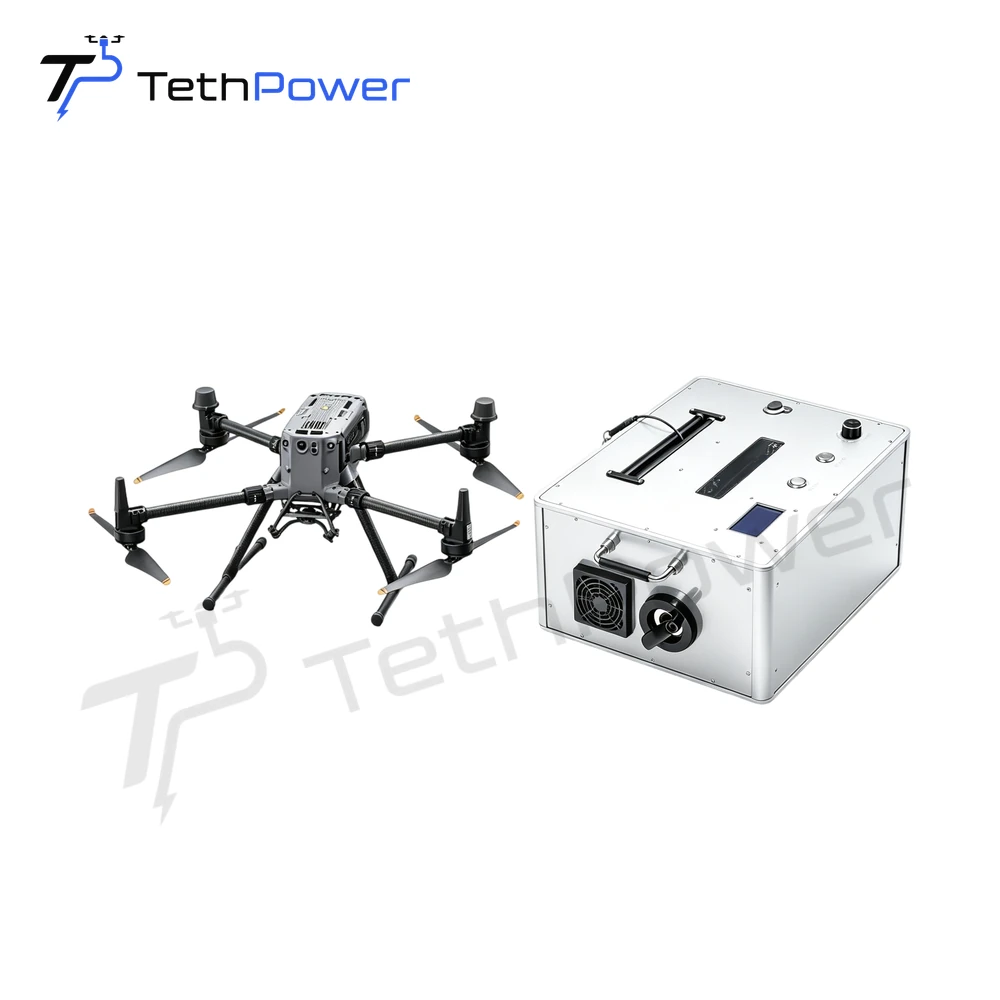
The DJI tethered systems range provides starting points for the named platforms in the catalogue. Check the exact supported model and package contents on the relevant product page. A system listed for one aircraft should not be treated as a universal battery replacement for another.
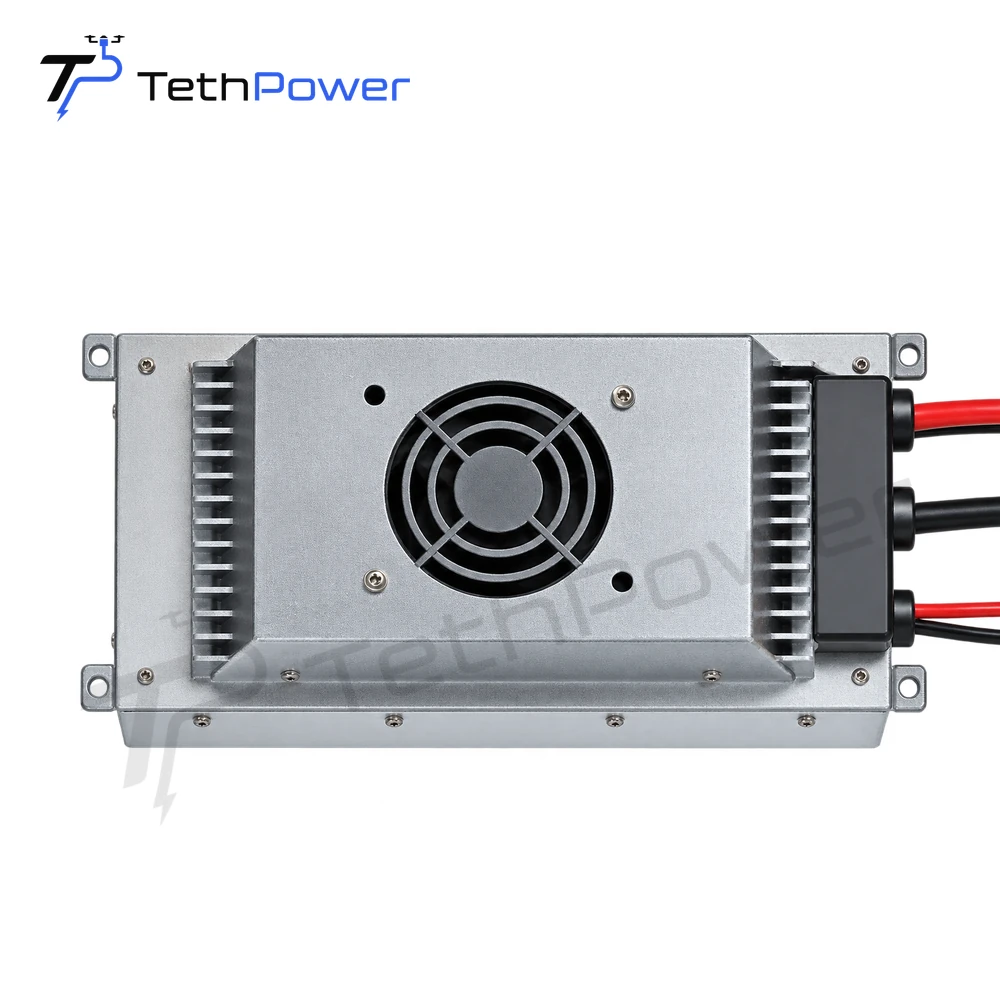
For a custom aircraft, the starting point is usually an airborne module and ground station selected around the aircraft’s requirements. Account for the module, cable and mounting mass, available cooling and the wiring route. For an existing tethered installation, identify which components will be retained.
Include the behavior when ground power changes
The integration review should cover connection, disconnection, changing load and loss of ground supply. A module specification alone does not define what the complete aircraft will do. Battery arrangement and flight-controller behavior belong in the same discussion.
The battery integration guide describes the relevant questions without assuming a universal wiring arrangement.
Put together the equipment you need
Use Build to select listed components for a proposed power system. If you only need a module, go directly to its product page for an enquiry. For a new airframe interface or an unlisted requirement, discuss the integration with us.
We can then separate the equipment you already have, the modules and accessories we would supply, and the work needed to bring the installation together.