The decision
Count the minutes that battery changes take from each shift using your own flight log, then price them with your own hourly figure. Put the tethered setup on the same basis: equipment, site energy, setup and recovery, tether checks and a backup battery.
Count the coverage time that battery changes take
When a task needs an aircraft overhead through a shift, battery operation splits the shift into flights. Between flights, your team lands, changes the battery, checks the aircraft and relaunches, and the task is not covered. A tethered drone vs battery drone cost per hour comparison starts by counting that time in minutes.
In words: divide the coverage time you need by the usable minutes of one flight, and round up to get the number of flights. There is one change fewer than the number of flights. Multiply the changes by the minutes one change takes, and you have the gap per shift.
In symbols:
- Flights per shift: N = T ÷ F, rounded up
- Changes per shift: C = N − 1
- Gap per shift: G = C × M
| Symbol | Meaning | Where it comes from |
|---|---|---|
| T | Coverage minutes you need per shift | Your job plan or your contract |
| F | Usable flight minutes per battery set | Your flight log with the actual payload, checked against the aircraft maker’s data and your landing reserve |
| M | Minutes per change, from landing to back on task | Your own log |
| R | Your hourly figure | Your own accounts |
Use measured values, not a published maximum hover time.
Example only: one shift, counted in minutes
Example only — replace with your own figures. Suppose your log shows a task that needs 360 coverage minutes in a shift, 30 usable minutes per flight and 10 minutes per battery change. 360 ÷ 30 = 12 flights, so there are 11 changes. 11 × 10 = 110 minutes of gap per shift. These figures are illustrative, not TethPower values, and they describe time alone.
The count leaves things out. It assumes every flight starts on time and lasts the same, and it excludes the battery sets and chargers that keep the rotation going, cooling and recharge time, any handover overlap when a second aircraft covers each change, and travel and weather holds. For battery-set planning when two aircraft take turns, see our A/B rotation planning reference.
Turn time into your own cost line
To turn the gap into money, use your own hourly figure, R: for example, the crew time that stands by during a change, or what an hour without coverage means under your contract. Then:
- Your cost line per shift = (G ÷ 60) × R
We give no money example, because your rates and contract terms are your own. Battery sets, chargers and battery replacement go on the battery side as separate lines from your own records.
For a dealer or integrator preparing a customer’s case, a cost line built from the customer’s own log can help a quotation hold, because every input traces back to their operation.
Add the tethered side: equipment, site energy, setup and checks
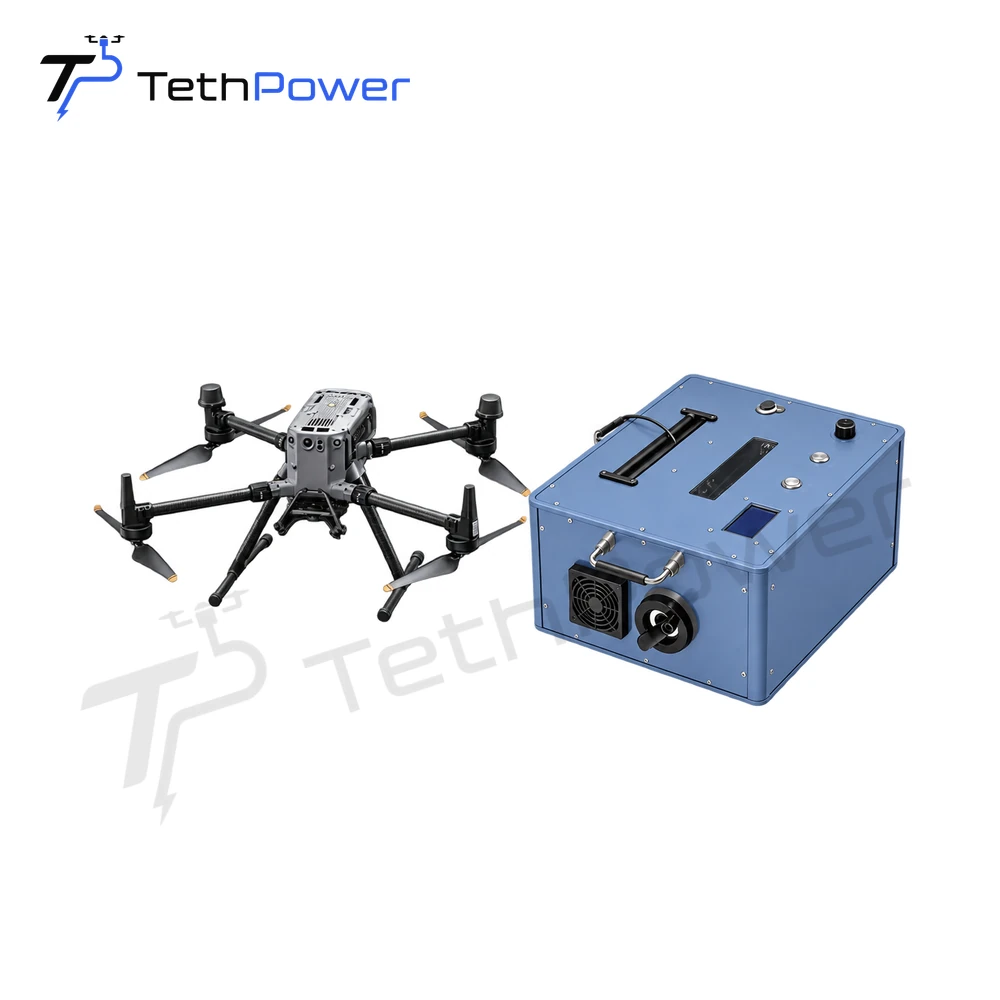
With tethered ground power, the aircraft draws power from a ground station through the tether. The work changes: fewer battery-change interruptions, while the ground supply, aircraft thermal limits and maintenance allow. The tethered side has its own lines, kept in symbols:
- Equipment: quoted by our sales team for your configuration
- Site energy: average measured load in kW × operating hours × your energy price
- Setup and recovery: minutes per shift, from your own trial or log
- Tether inspection and consumables: your team’s checks and wearing parts such as the tether cable
- Backup battery: the aircraft battery your installation keeps, with its care and replacement
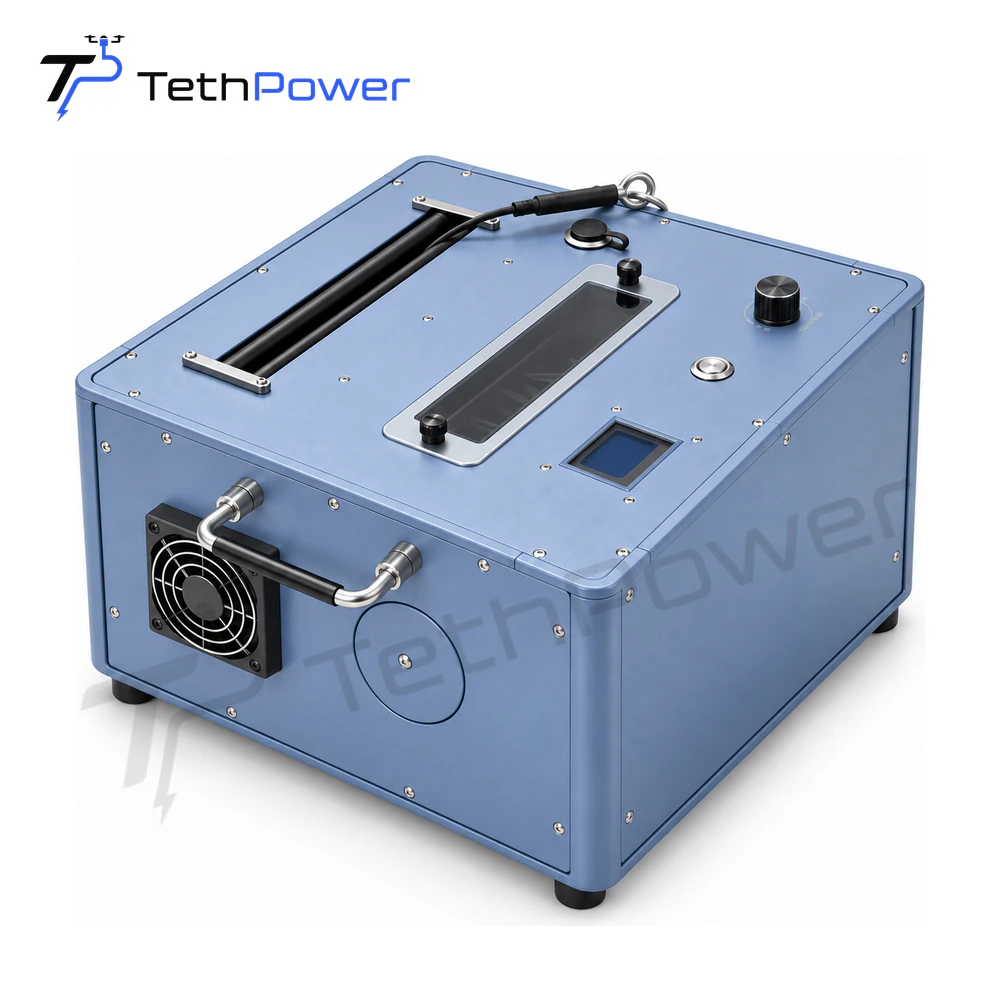
For site energy, use the average load you measure in operation; a rated or maximum figure is not an average. Our TP-T4H ground station, for example, lists 4 kW rated power and 4500 W maximum output power, with an AC 220 V external power input; neither is the load your aircraft draws on a given task. To choose the supply, see the AC supply for a tethered drone ground station.
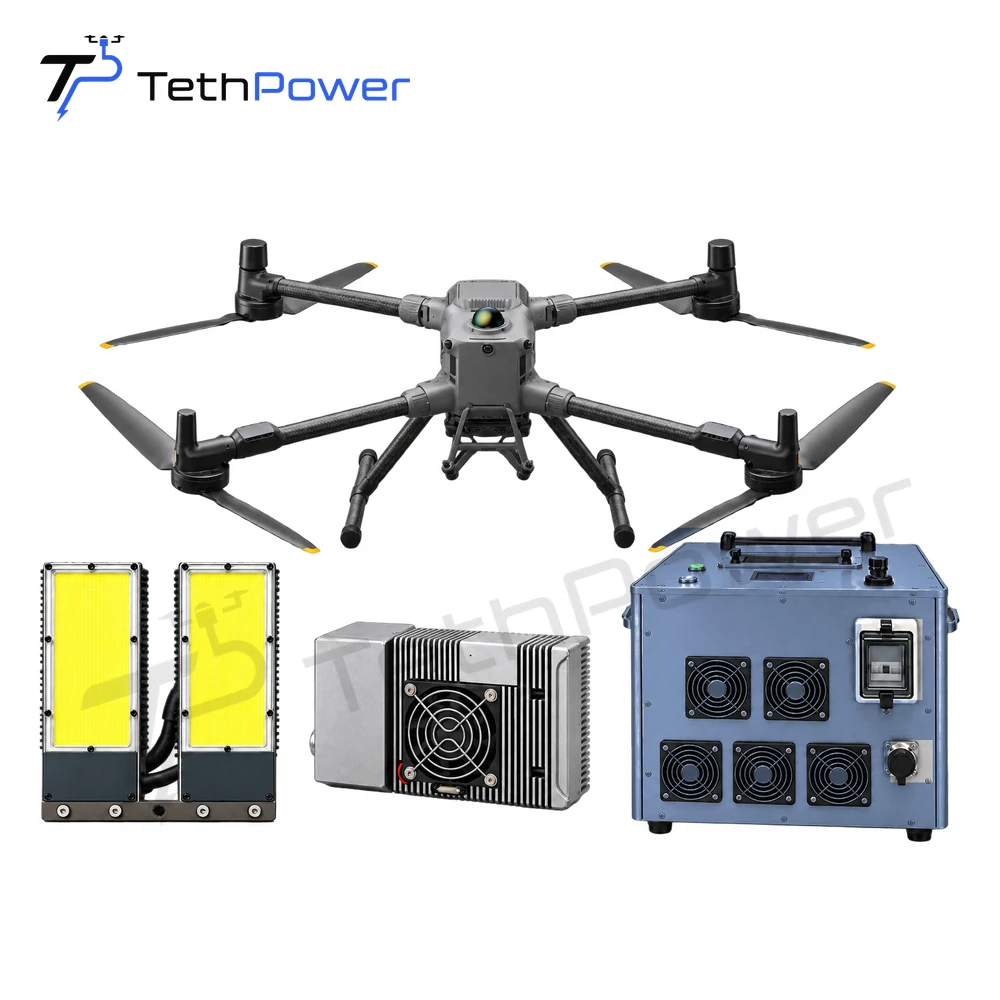
TP-T4H is a separate ground station. The two DJI systems on this page each include their own ground unit and airborne module: TP-Matrice M350 for DJI Matrice 300/350, and the TP-Matrice M400 tethered lighting system for DJI Matrice 400. For the M400 system, confirm the aircraft configuration, the available 220 V AC supply and the tether routing before ordering. On site, follow the product manual and your site’s own work rules.
Keep unplanned stops on a separate line
Unplanned stops should not hide inside planned changes. From your own log, record U, the unplanned stop minutes per shift, for each method: on battery operation, an early landing or a weather hold; on tethered operation, an interruption of the ground supply, a tether fault or a pause for aircraft temperatures. Then:
- Unplanned line per shift = (U ÷ 60) × R
Tethered power changes where the limits sit; it does not remove them. Motors, ESCs, propellers, cooling, flight-control behavior, weather, payload and maintenance still limit flight endurance. A ground-power architecture that can run for extended periods does not mean every aircraft can stay airborne without inspection: its thermal limits and maintenance intervals still apply.
Where battery flights remain the better choice
Battery flights remain the better fit for mobile, wide-area and long-range work, such as mapping, inspection routes and photography, where the aircraft moves away from one point. They also suit short tasks that a few flights cover, sites with no suitable ground supply or space for a ground station, and jobs that move between locations during a shift. There, the gap per shift may be small, and the tethered lines would add equipment the task does not need.
Our tethered drone vs battery drone comparison covers architecture, mobility and ground equipment in more detail.
Send the same duty cycle with your quotation request
A comparison holds when both sides use the same duty cycle. Send us the figures you used for the battery side: coverage minutes per shift, shifts per period, the aircraft and payload, the working height and the site supply available. On that basis, our sales team quotes the equipment and confirms the price, lead time, payment terms, tether and spare-part costs and delivery for your project.
You can assemble a proposed configuration in Build and send it with your duty cycle. For a voltage, cable, connector or mounting requirement outside the listed options, see our custom tethered power service.