
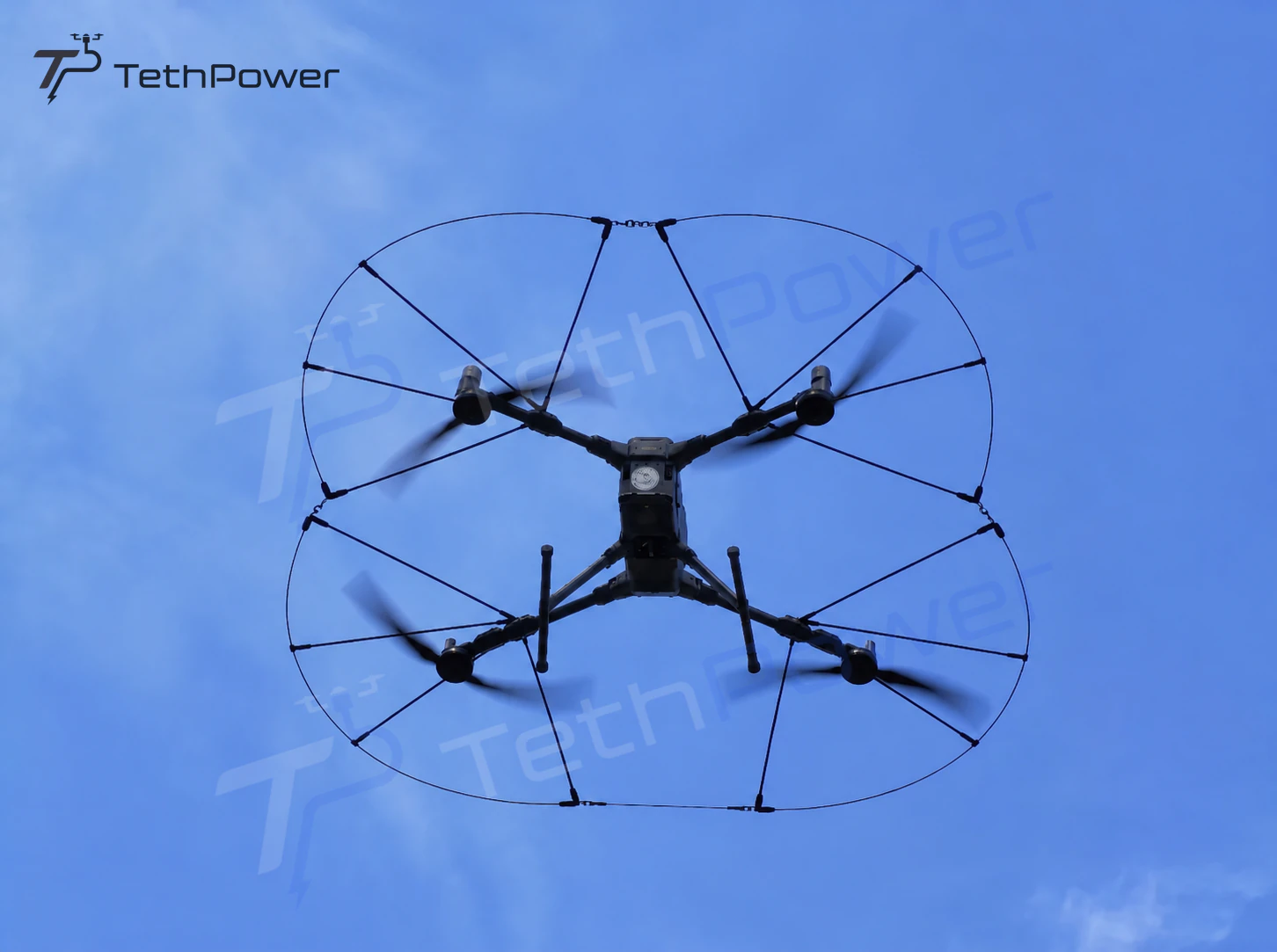
At a glance
Include the guard in the complete installed configuration and measure usable flight time under representative conditions. Guard mass alone cannot tell you how many minutes you will lose or how much inspection work each sortie will complete.
Count everything installed on the aircraft
Start with the aircraft’s current instructions and the exact configuration you intend to use. Include the guard, payloads, mounting hardware and other accessories. A published aircraft capability is not an allowance you can allocate independently to each accessory.
Our guard comparison gives complete-set mass for both architectures. Use those figures when planning, then confirm the actual supplied hardware and total installation. Keep the required operating margin instead of treating an arithmetic remainder as approval to fly.
Separate the variables in your flight record
Record enough context to compare flights meaningfully. A short hover with a different payload or in calm weather cannot establish the endurance of a working mission.
| Variable | What to record | Why it matters |
|---|---|---|
| Configuration | Guard revision, payloads and total installed mass | Changes alter the complete aircraft |
| Conditions | Wind, temperature, altitude and site exposure | Conditions affect usable performance |
| Battery | Battery condition and the operating procedure used | Different battery conditions distort comparisons |
| Mission | Route, speed, hovering and landing reserve | Useful work differs from maximum time aloft |
Use the aircraft’s prescribed operating limits and battery procedures. Do not run a battery to exhaustion to create a more impressive comparison.
Measure useful work per sortie
Plan a controlled evaluation with a clear landing area. Check handling, braking, warnings and sensor visibility before expanding the route. Record how much of the agreed inspection can be completed while retaining the required landing reserve.
Repeat only within suitable conditions and note changes between flights. The result applies to that configuration and environment. There is no single flight-time reduction that can be assumed for every guarded installation.
Translate the result into staffing and scheduling
Use measured useful flight time to plan battery handling, crew time and site access. Include assembly, checks and the time needed to move between inspection positions. If the job needs more sorties, reflect that in your offer rather than relying on the aircraft’s headline endurance.
Keep guard selection separate from power-system selection. A propeller guard does not supply power. Adding a tethered power system would introduce its own mass, cable route and integration requirements; compatibility with the guard must be reviewed for the combined installation.
Bring the complete configuration to the discussion
Tell Stella which aircraft, payload and guard you have in mind, and how long the task needs to run. We can work through the available mass allowance, operating conditions and installation checks before you order.
Use our custom integration guide for the mechanical information to include. Consult the current DJI aircraft documents for aircraft operating instructions and limitations.