
At a glance
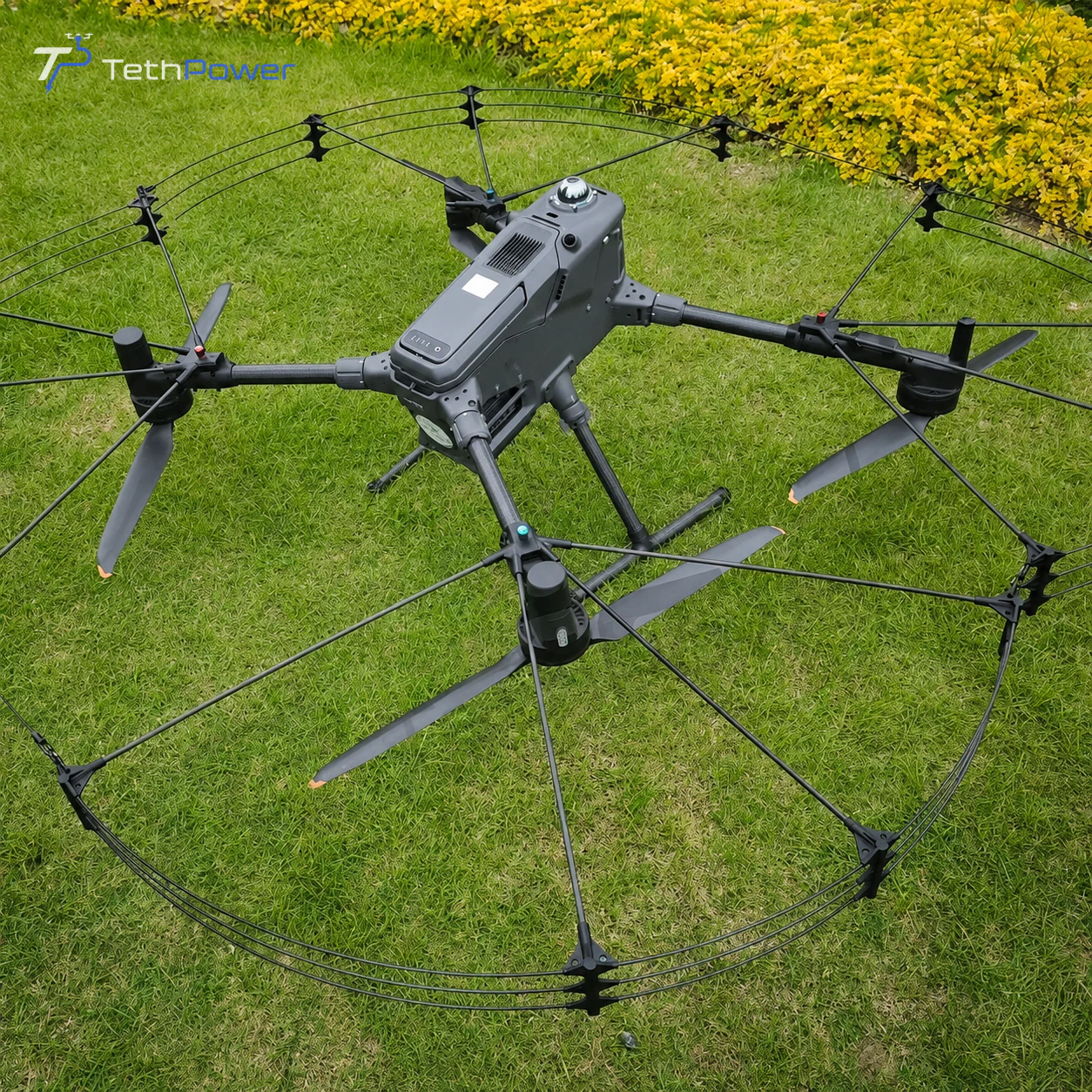
Start with the obstacle geometry and the complete aircraft configuration. Our single-rail guard prioritizes simpler installation and payload margin; our triple-rail guard provides a wider lateral barrier. Neither is the right choice for every mission.
Describe the obstacle before choosing the frame
A wall, an exposed beam and vegetation present different contact geometries. Describe the closest obstacles, possible approach directions, escape path and intended stand-off distance. A wider lateral barrier can be relevant near structures, but it does not enclose every possible route to the propellers.
Use our published guard comparison for the available architectures. Avoid choosing solely from a photograph or assuming that more rails automatically mean a safer complete operation.
Compare the confirmed configuration differences
The masses below refer to the complete guard set. They are not aircraft payload ratings, and they do not establish a permitted payload or a flight-time penalty.
| Selection point | Single rail | Triple rail |
|---|---|---|
| Complete guard set mass | 710.9 g | 850 g |
| Main design priority | Simpler installation and payload margin | Wider lateral barrier |
| Starting point to assess | Open-air work with lower installed burden | Work where lateral obstacles are a major concern |
| Checks still required | Clearance, sensors and handling | Clearance, sensors, handling and drag |
Confirm the supplied revision before ordering. Include the guard alongside every payload, bracket and other accessory in your installed-mass review.
Check whether the mission is suitable at all
Indoor work also depends on navigation, lighting, airflow, clearance and emergency landing space. A guard does not resolve those conditions. For work near people or property, maintain the required separation and site controls; a physical barrier does not grant operating permission.
Wind response must be checked with the final configuration. We do not publish a universal accessory wind limit or a collision tolerance for these guards. Apply the most restrictive applicable aircraft, accessory, payload and project limits.
Ask for evidence from the installed aircraft
Before operational use, check that the frame is secure, no part can enter a propeller disk, and sensors and moving payloads remain unobstructed. Review aircraft warnings and conduct controlled handling checks in a clear area. Use the current installation instructions for the supplied hardware.
If you change the payload or another accessory, review the combination again. The integration brief explains the photographs and measurements that make this discussion useful.
Discuss a guard for your inspection work
Tell Stella which aircraft you use and the inspection work you have in mind. Site photos and details of any fitted payloads help us discuss the guard options, working distance and transport needs before you order.
Contact sales for the current supply scope, price and delivery arrangements. If your main uncertainty is endurance or usable payload, start with flight planning before comparing purchase prices.