At a glance
Choose the bucket format and size against the carrier's allowance, transport space and the interfaces required for the specific installation. Bucket capacity is not an approved aircraft payload.
Start with the bucket you need to transport and carry
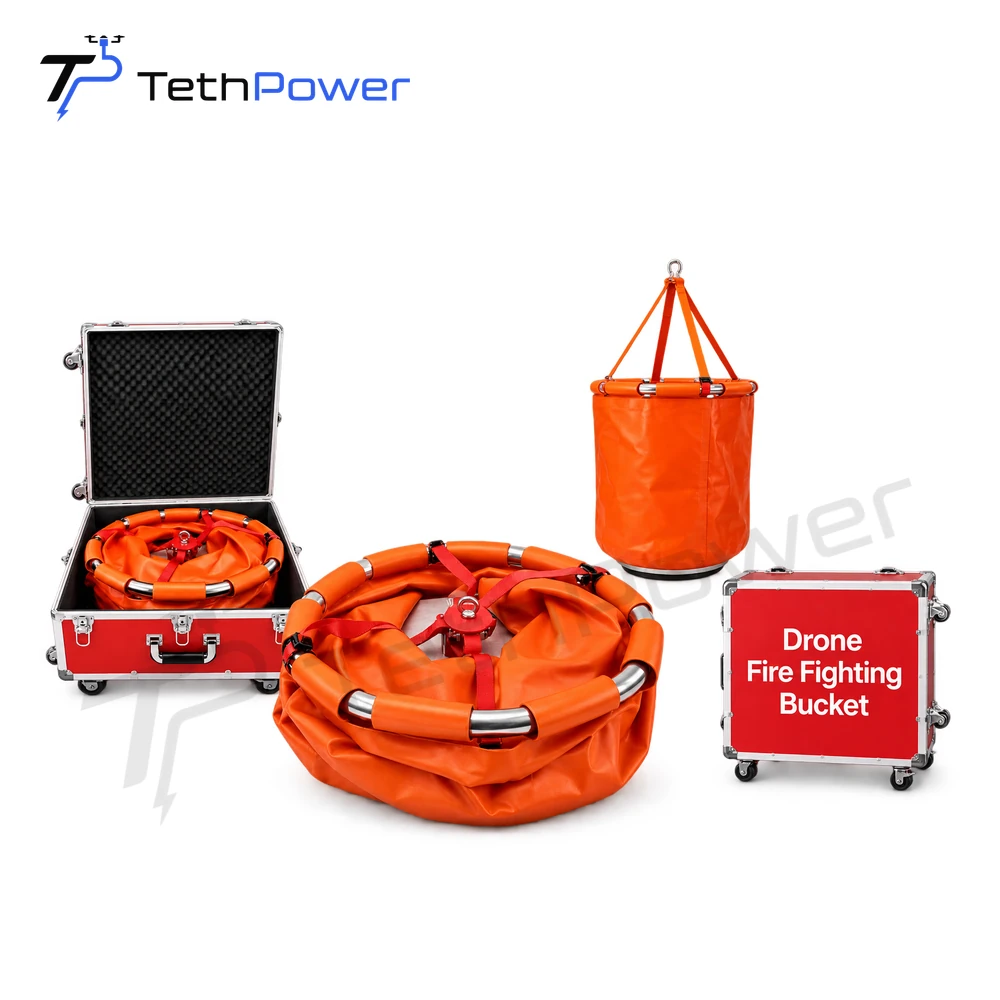
A soft bucket and a rigid bucket can both be considered for a carried-water project, but the choice starts with the aircraft, available transport space and intended fill. Our TP-FC100-FFB range includes a collapsible 100 L soft bucket and rigid buckets in four capacities. Check the complete carried load and the actual installation before selecting either format.
If your first question is whether to carry water or supply it through a hose, read our bucket versus hose guide. If you already have a carrier allowance and need to estimate a fill, use bucket volume versus carried load. This guide compares the bucket formats and the information needed to choose one.
Compare the available buckets
| Bucket | Capacity | Empty bucket weight | Material |
|---|---|---|---|
| Soft | 100 L | 9 kg | Double-coated polyester-fiber mesh |
| Rigid | 100 L | 8 kg | Aviation aluminum alloy with fire-retardant paint |
| Rigid | 160 L | 12.5 kg | Aviation aluminum alloy with fire-retardant paint |
| Rigid | 180 L | 13.5 kg | Aviation aluminum alloy with fire-retardant paint |
| Rigid | 200 L | 14 kg | Aviation aluminum alloy with fire-retardant paint |
The two 100 L options have the same stated volume but different empty bucket weights. The rigid sizes offer a choice of stated volumes, each with its own empty weight. These figures describe the buckets; they do not establish the weight of the complete suspended assembly or the fill a particular aircraft can carry.
Compare transport and storage before deciding
The soft bucket is collapsible, so its packed arrangement is relevant when storage or shipment space is limited. Ask us for the packed dimensions and the items included in the proposed shipment before planning space. For a rigid bucket, request the corresponding dimensions and transport arrangement for the selected capacity. Do not assume either format fits a vehicle, case or storage area without those details.
The materials also differ: the soft bucket uses double-coated polyester-fiber mesh; the rigid bucket uses aviation aluminum alloy with fire-retardant paint. Discuss handling and storage requirements for your project with us instead of assuming a material alone determines suitability.
Check the load and control interfaces
Use the aircraft manufacturer’s payload allowance for the actual carried assembly and operating conditions. That allowance must cover the empty bucket, suspension hardware and fittings, and the intended water or other agent. Identify any other equipment that shares the allowance. Bucket capacity is a volume, not a permitted flight load; the allowable fill depends on the carrier and the mass of everything it carries. If rigging mass or an applicable allowance is unknown, leave it open until confirmed.
We list DJI FC100, T100S, FC30 and third-party carrier aircraft as platform references. Those references do not establish that every bucket size or fill is suitable for every aircraft. Confirm the specific aircraft, attachment and load conditions separately. The product lists PSDK, Ethernet, serial and receiver control interfaces; tell us which interface your aircraft and control arrangement require so we can review the proposed configuration.
Give Stella a practical comparison to work from
Tell Stella the aircraft model and the payload allowance and conditions supplied by its manufacturer, your preferred bucket format and capacity, intended agent and fill, known rigging weight, available transport space, and required control interface. Ask for the packed dimensions, attachment details and an itemized equipment scope. We can compare the options with you and identify what still needs confirmation before a quote.
Contact us about the TP-FC100-FFB with those details. For a broader purchase, the quotation checklist helps identify the equipment and information to include.