At a glance
A cable-length specification is not a guaranteed working height. Describe the whole deployment geometry and review it with the aircraft, payload and operating conditions.
State the height you actually need
The height your job needs is the starting point for choosing a tether. Part of the cable may remain on the ground or follow a route around the site, so its full length is not available as vertical height. The aircraft, suspended load and operating conditions also affect the deployment.
Give the required height above the takeoff area and describe the task at that height. Include any horizontal offset between the ground station and aircraft, as well as the route from the reel to the takeoff position. The entire deployed cable path matters.
Avoid translating a nominal cable length directly into a flight altitude. Site geometry, cable handling and operating conditions need a separate review. A catalogue length is a property of the supplied configuration, not a permission or performance guarantee for every site.
Describe the moving load
Record the aircraft, payload, airborne equipment and the amount of cable expected to be deployed. Cleaning operations may also involve a hose. Its filled condition and routing need to be considered in the cleaning integration review rather than hidden inside a generic payload number.
Send drawings or photographs showing obstacles, transitions in the route and where the ground equipment can be placed. This makes the actual requirement easier to discuss than a single requested height.
Review electrical and mechanical conditions together
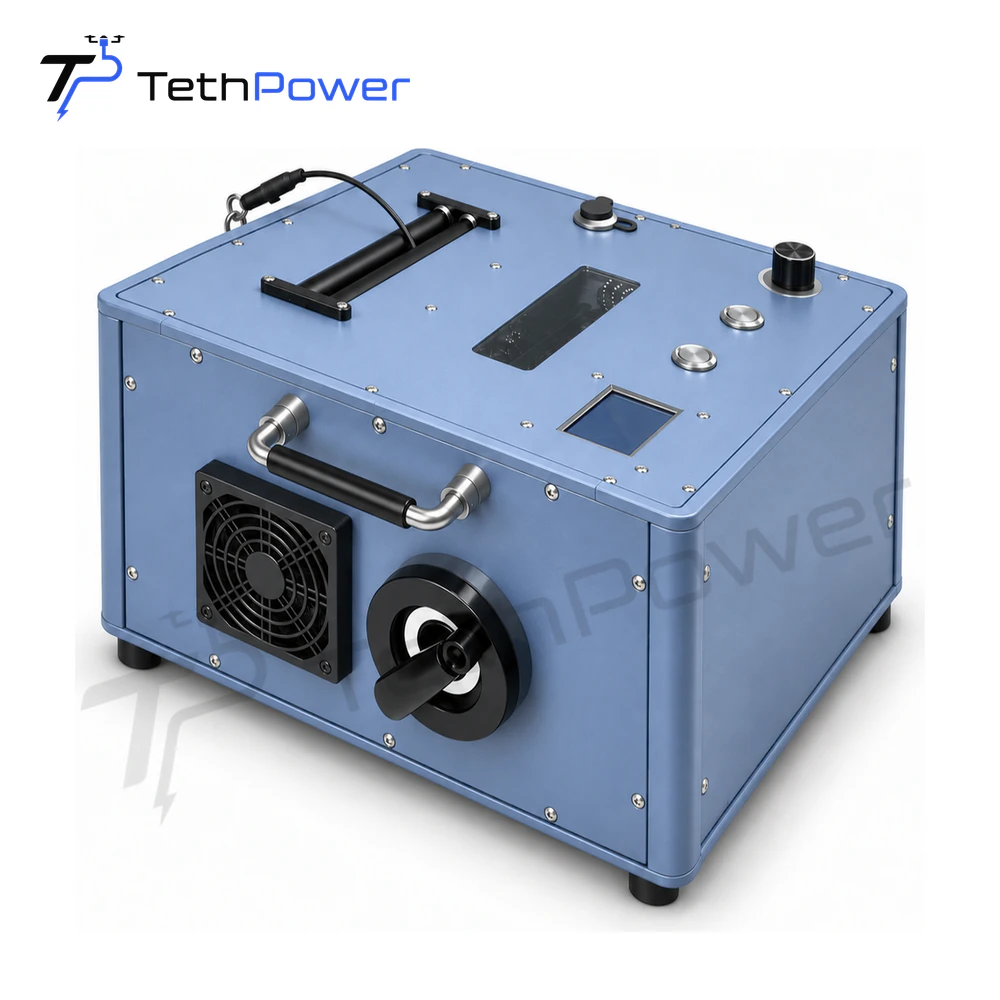
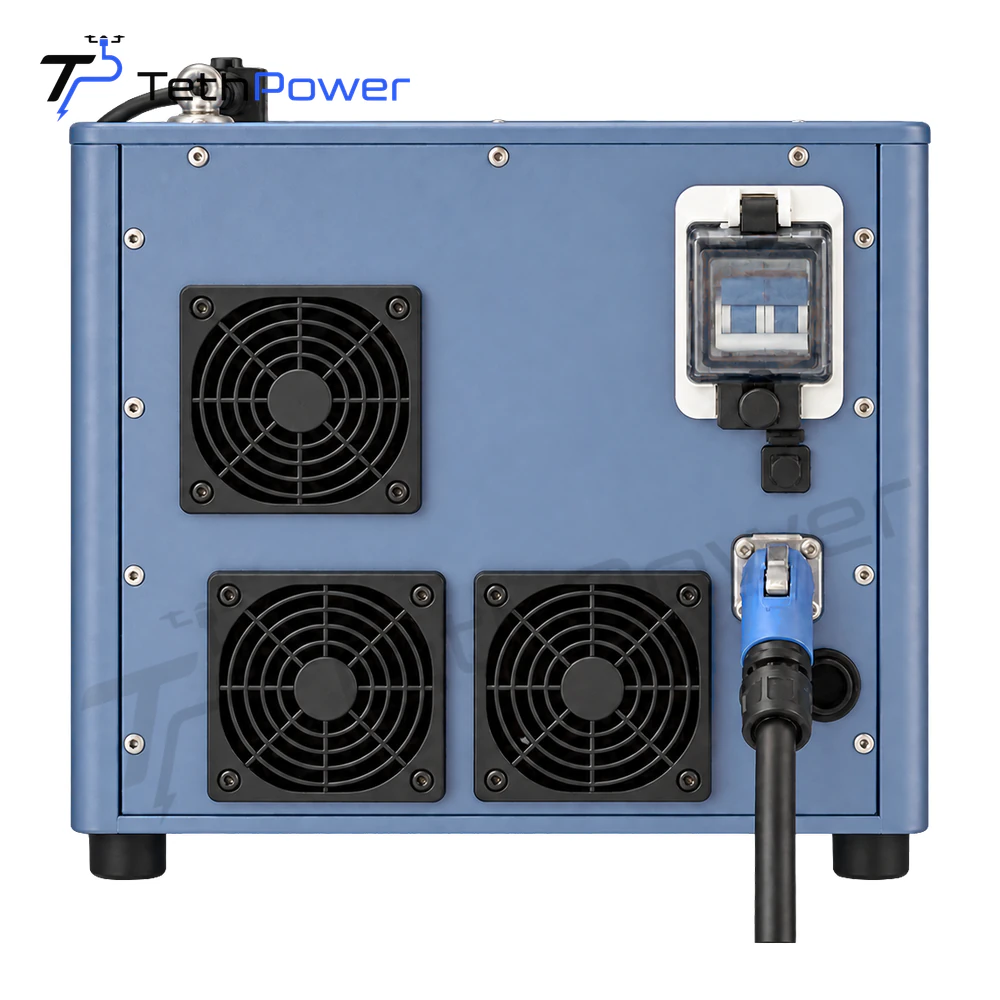
Cable selection involves the ground station and airborne converter as well as the aircraft. A longer cable should not be substituted solely because its connectors appear to match. Ask for the proposed cable specification and review the resulting configuration with us.
Similarly, the site team needs a deployment and recovery arrangement that suits the reel and operating procedure. Clarify who manages the cable, what space is available and how equipment moves between positions.
Show us where you want to work
A simple site plan or photograph gives us a useful place to begin. Tell Stella the working height, aircraft and task you have in mind. We can then discuss the horizontal offset, payload, duration and ground power. If the site is not yet chosen, share the conditions you expect.
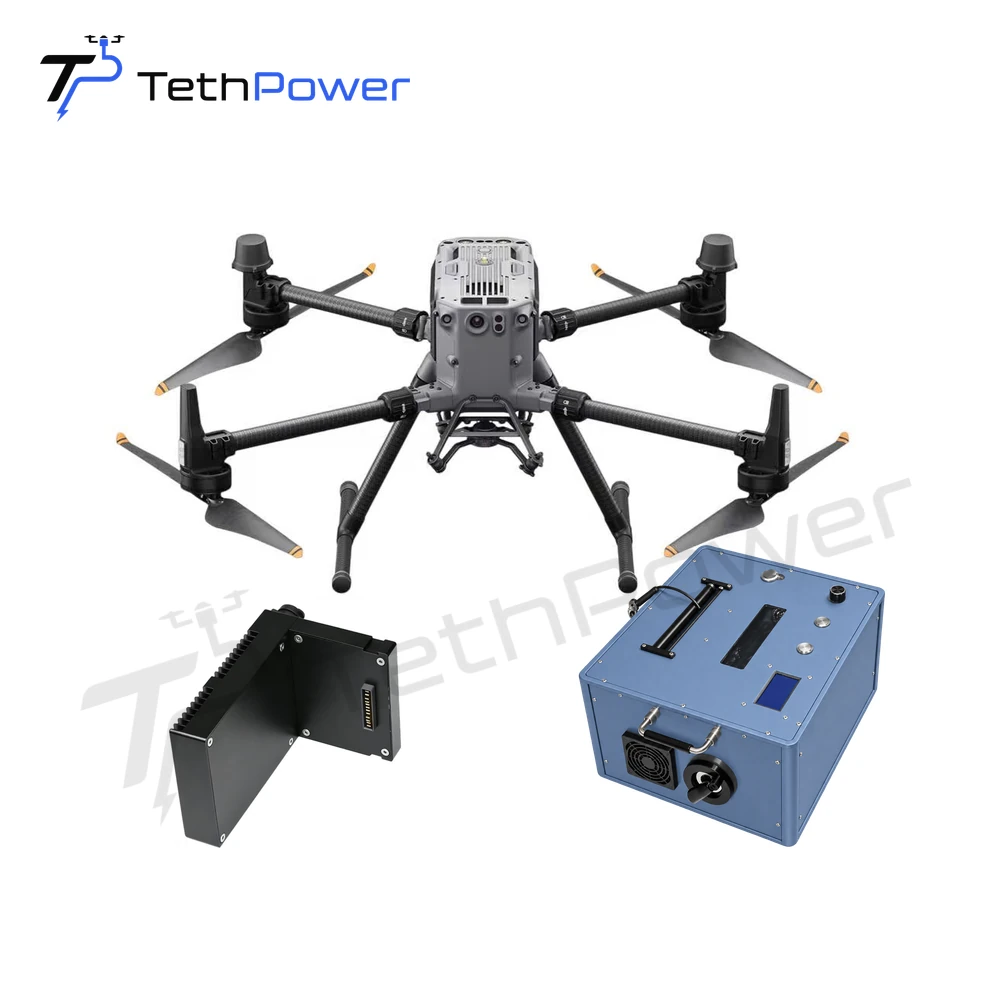
For a named DJI configuration, consult the Matrice 300/350 system or the relevant current product manual. Use the selected model’s exact cable and electrical values when comparing it with the requirement; do not transfer them to a different aircraft family.
Cable length, flight height and carried weight
The aircraft carries the suspended cable. The electrical path may also include cable on the reel or on the ground. Horizontal offset and cable shape affect how much length is needed to reach a given height.
Example airborne mass budget
Our cable specifications give masses of 13, 19, 30 and 42 g/m. The example below assumes the full stated cable length is suspended. Aircraft assumptions remain illustrative: a 12 kg entered mass limit, 6 kg flight-ready aircraft including its battery, 0.5 kg airborne module, 0.4 kg installation hardware and 1 kg mission equipment. No hose or additional reserve is included.
* Values are for reference only. Actual results depend on the application and operating conditions.
| Cable | Mass per metre | Suspended length | Cable mass | Remaining mass budget |
|---|---|---|---|---|
| 7 A / 110 m | 13 g/m | 110 m | 1.43 kg | 2.67 kg |
| 10 A / 120 m | 19 g/m | 120 m | 2.28 kg | 1.82 kg |
| 15 A / 120 m | 30 g/m | 120 m | 3.60 kg | 0.50 kg |
| 25 A / 120 m | 42 g/m | 120 m | 5.04 kg | -0.94 kg |
Cable mass equals suspended length multiplied by mass per metre. If only part of the cable is suspended, use that suspended length for the mass calculation. The examples do not specify an approved aircraft pairing or operating height.
The remaining budget is arithmetic mass headroom. It does not account for wind drag, cable tension or the aircraft’s thrust and flight envelope. For cleaning, also include the suspended hose in its filled operating condition.
Questions before ordering
Can we discuss a 150 m cable for an M350 configuration?
Yes. We can discuss a custom 150 m cable configuration. The currently published TP-Matrice M350 configuration lists a 110 m cable. We will review the cable, voltage under load and airborne mass for your project.
Does the remaining mass budget show how much payload the aircraft can safely carry?
It shows the difference between the entered mass limit and the listed masses. Wind, cable tension, aircraft performance, installation limits and the flight envelope require a separate review.